
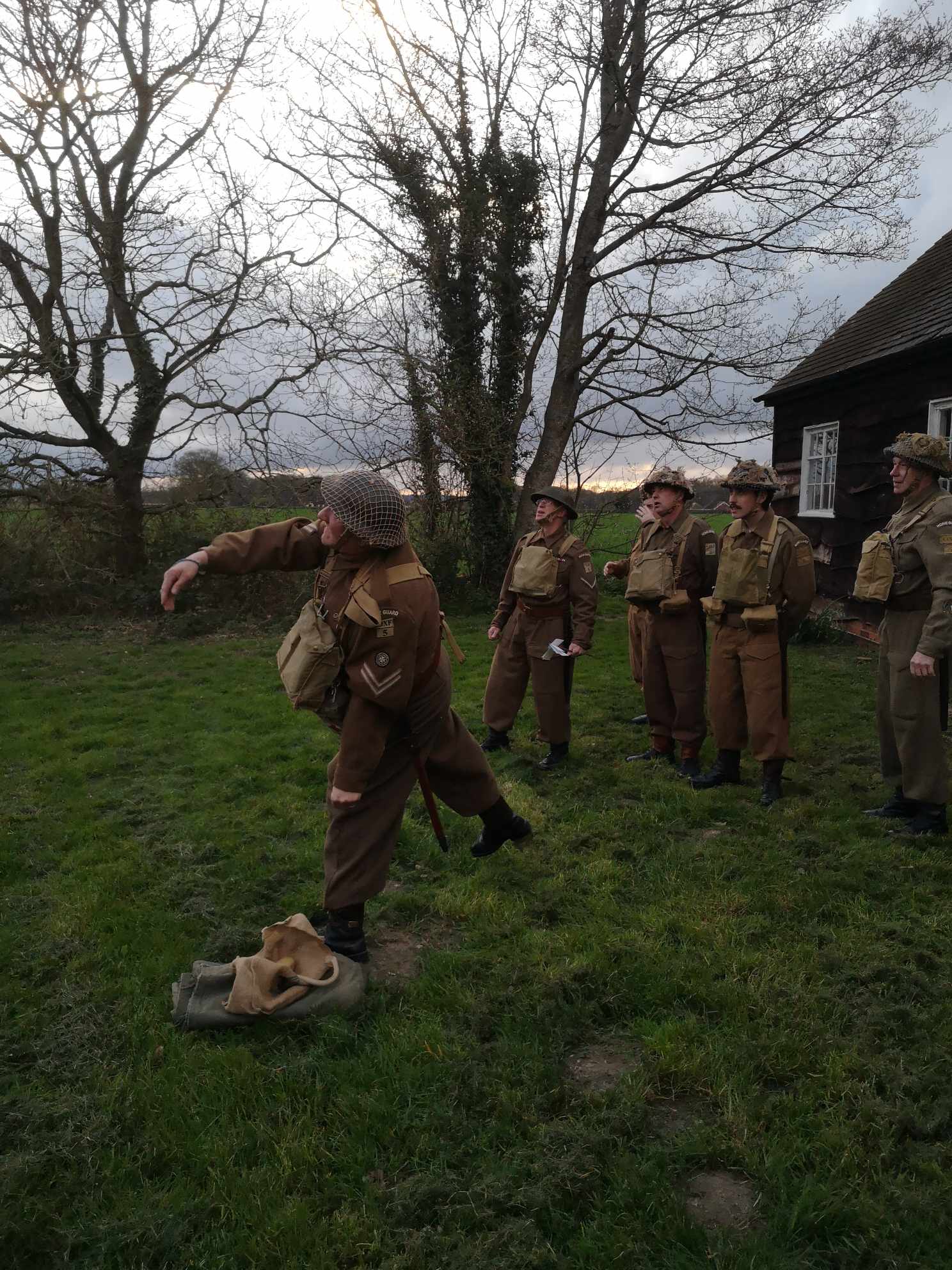
This week’s Redline Home Guard training evening focused on wartime grenades and infantry explosives, combining practical outdoor training with an in-depth look at the weapons and equipment used during the Second World War.
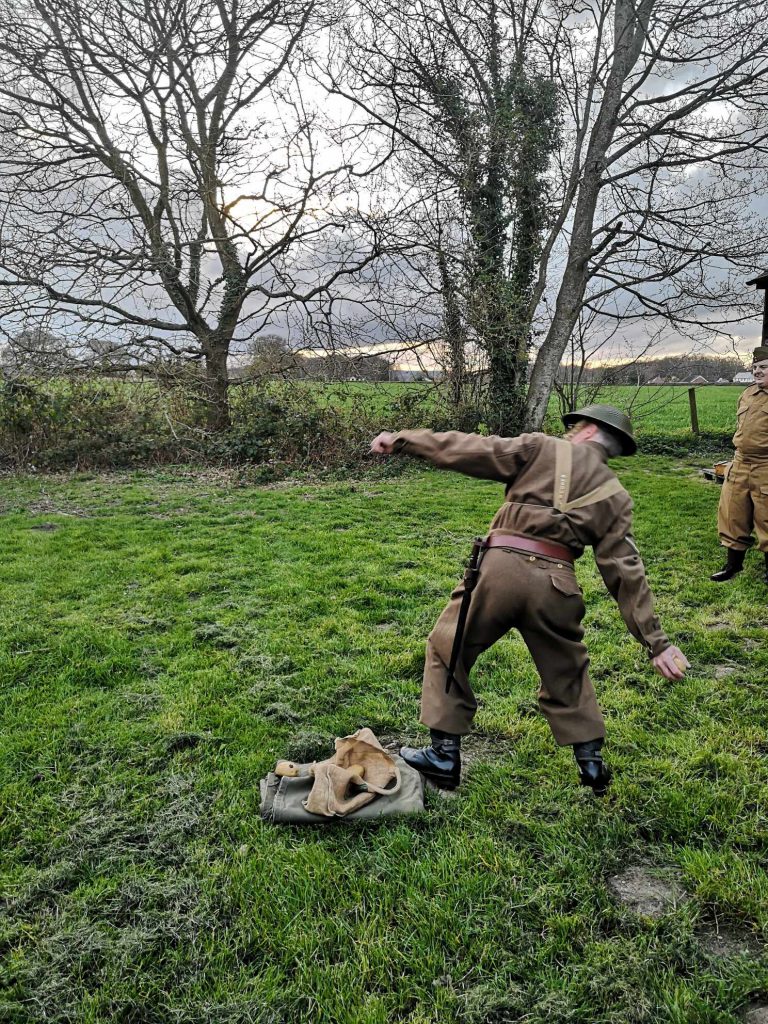
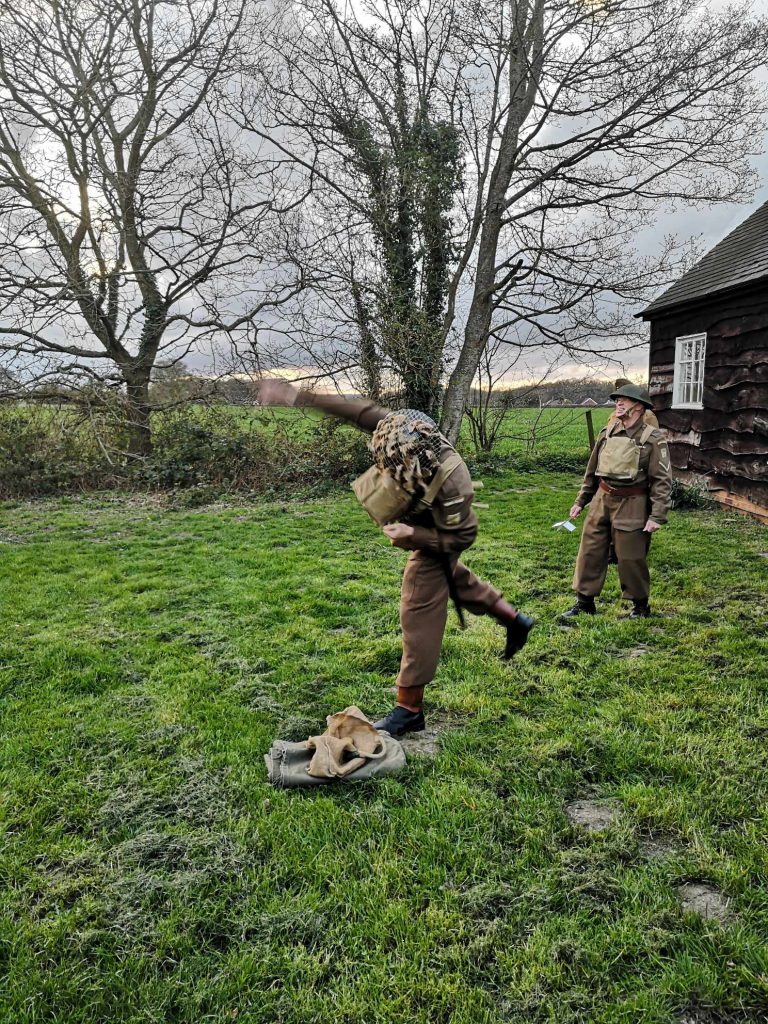
We began the evening outside, making the most of the remaining daylight to practise grenade throwing techniques. In true Home Guard fashion, we used large potatoes in place of live grenades, something genuinely carried out by Home Guard units during the war when real training equipment was often in short supply. The strong winds certainly added an extra challenge to the exercise, with more than a few throws being carried well off course.
As the light began to fade, the training moved indoors where members were given a detailed demonstration covering the different types of British and German grenades used during the war. Using a range of inert examples, replica devices and training aids, the session explored the development, purpose and operation of various fragmentation, blast and anti-tank grenades.
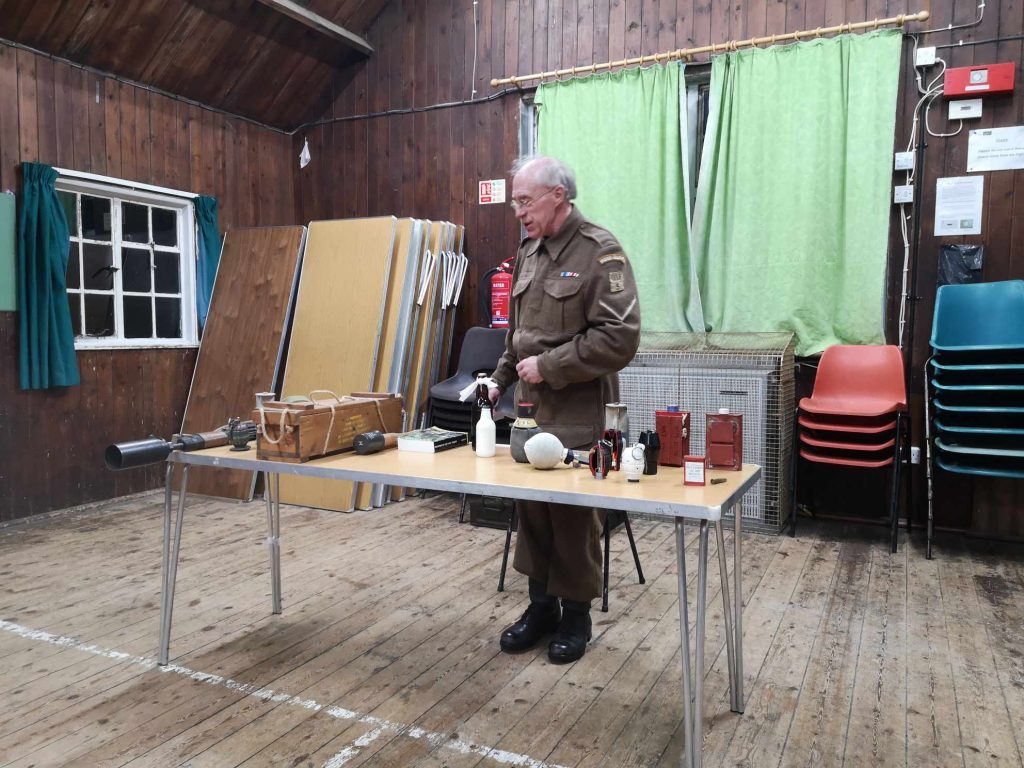
Particular attention was given to identifying grenade bodies, fuzes and internal components, helping members better understand how the different designs functioned and how wartime soldiers or Home Guard units would have recognised them in the field.
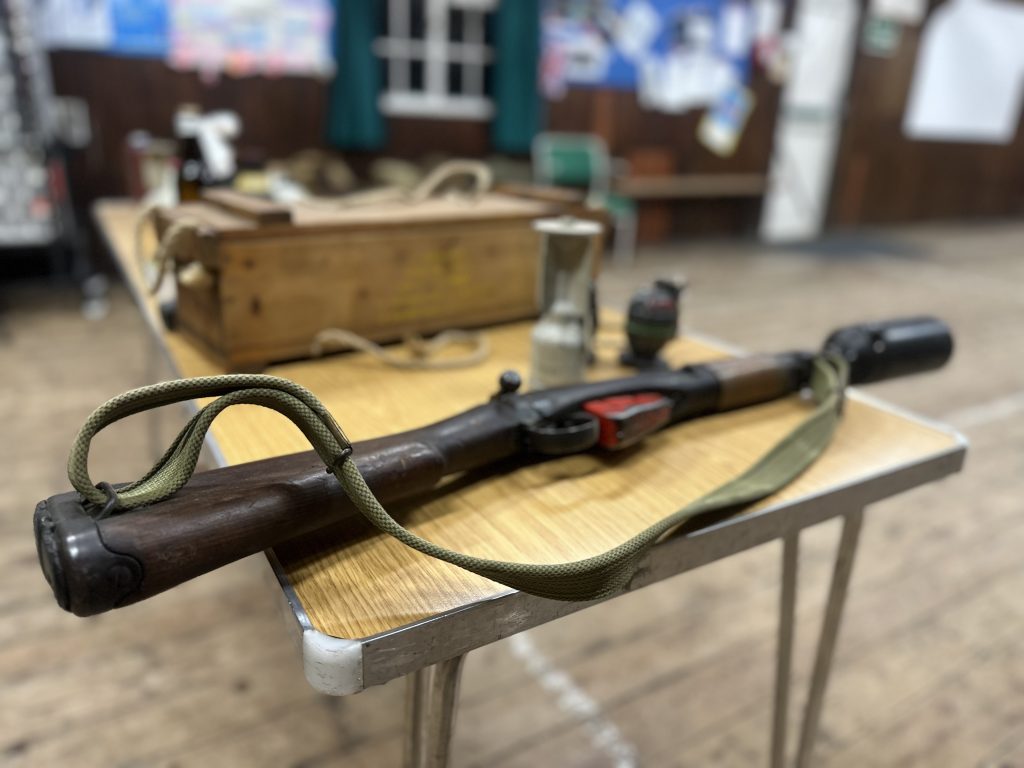
British equipment discussed during the evening included the famous No.36M Mills Bomb, one of the most recognisable British grenades of the war, alongside the No.69 impact grenade, No.68 anti-tank grenade, Hawkins anti-tank mines and the infamous sticky bomb, one of the more unusual improvised anti-tank weapons issued to the Home Guard during the early invasion scare of 1940. The session explored how these different weapons were intended to be used, as well as the practical realities and dangers faced by those trained to carry them.
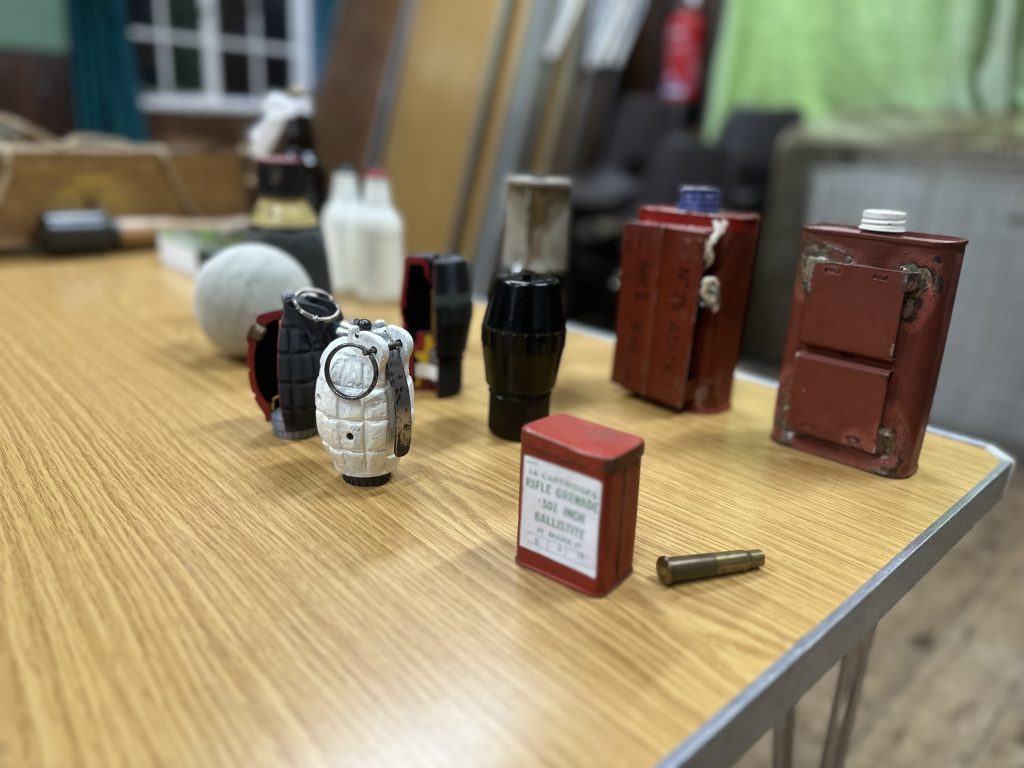
German ordnance also featured, including the well-known stick grenade, commonly nicknamed the “potato masher”.
Training evenings like these remain an important part of Redline’s living history and research work, helping members gain a more practical understanding of wartime equipment, tactics and Home Guard training methods.
Despite the weather, it made for another highly enjoyable evening of hands-on learning, historical discussion and practical fieldcraft.
No responses yet