
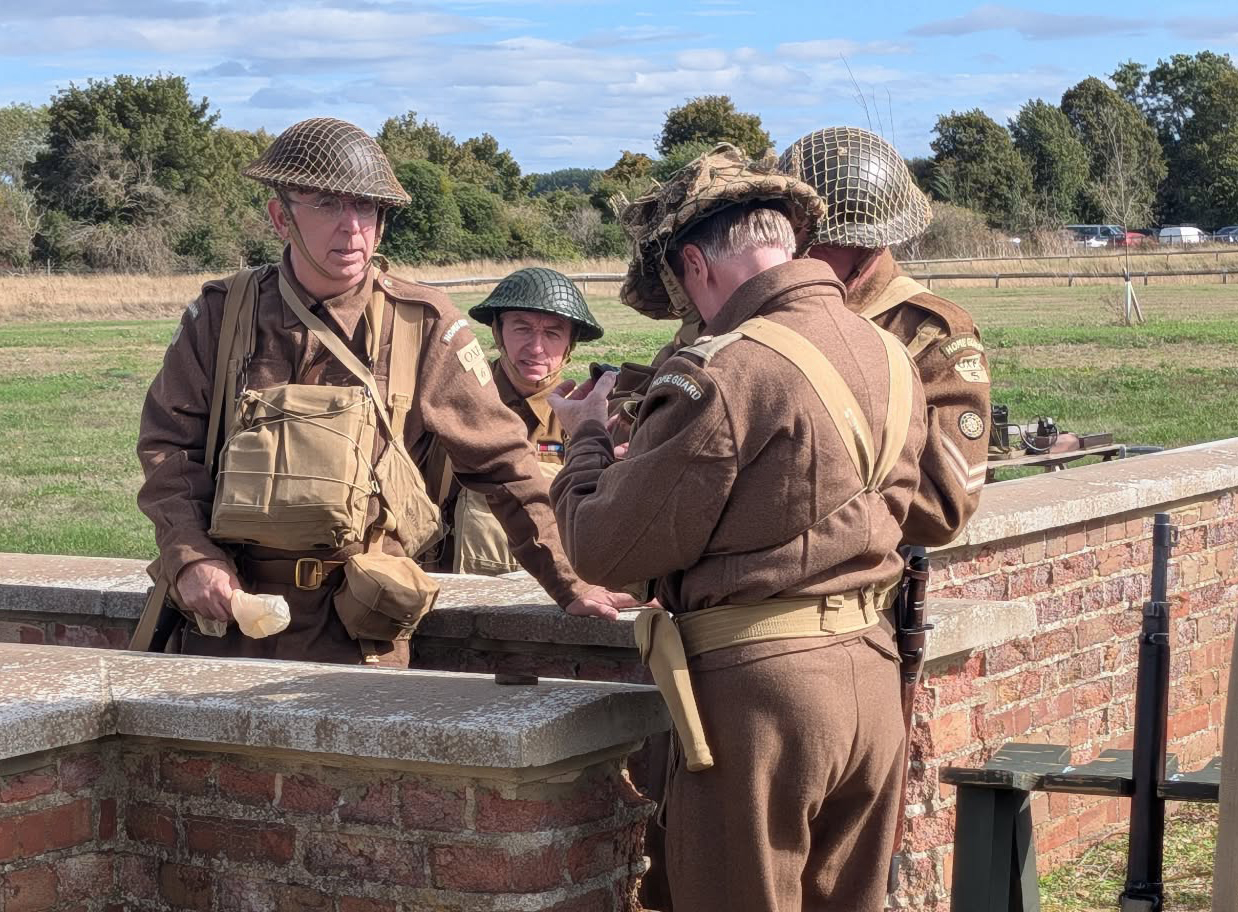
It was a busy September weekend for the Redline Home Guard, beginning with an evening of drill training at Cholsey & Wallingford Railway on Friday 11th September, before a small contingent headed to RAF Stanton Harcourt the following day to take part in an event marking the 80th anniversary of the airfield’s closure.
Friday – Drill Training at Wallingford Station
Report by Pte Hutt
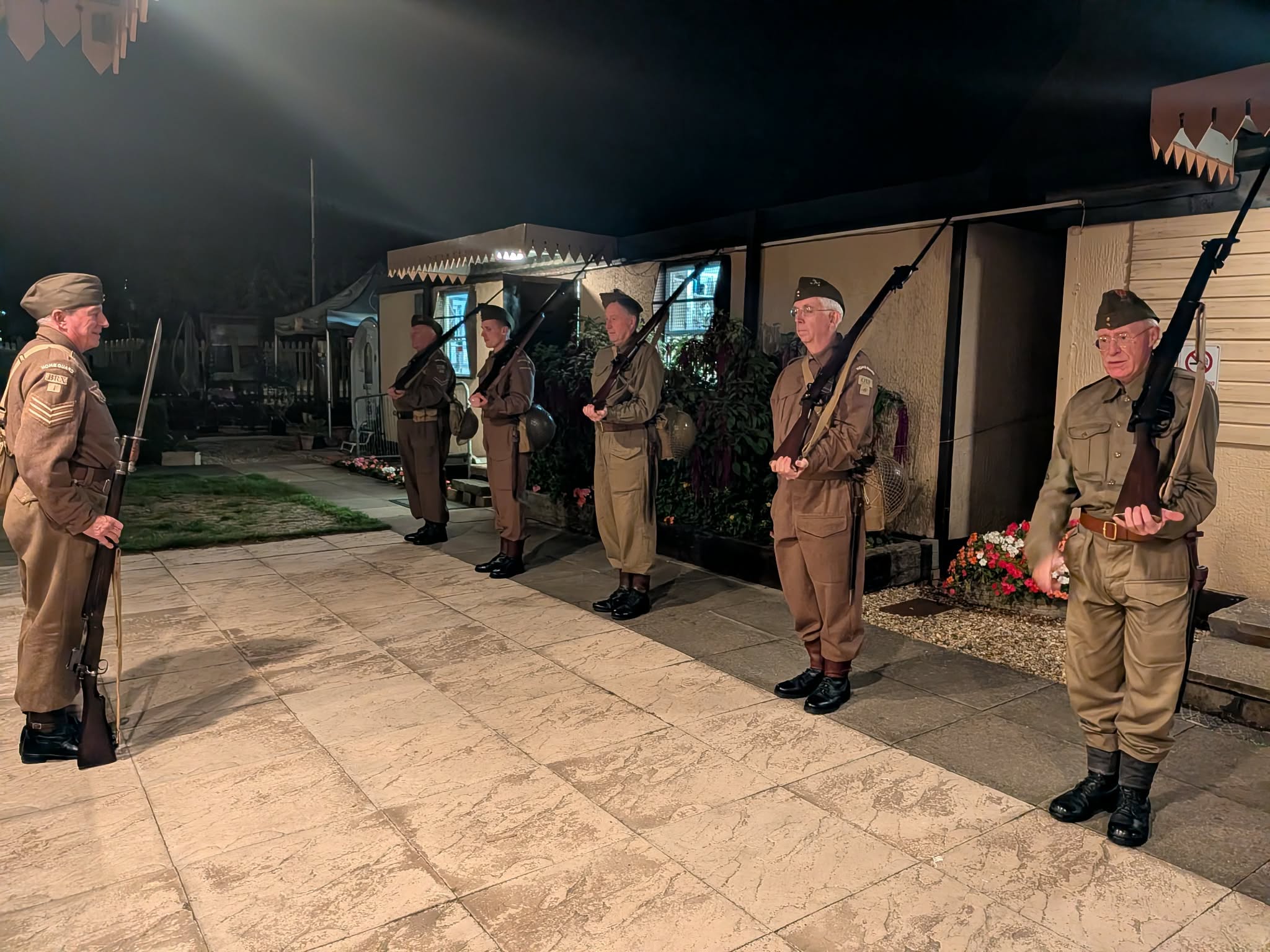
Friday evening saw us muster at CWR’s Wallingford Station. It is a great training venue at any time, but particularly useful for drill, providing plenty of space for both static and marching practice – as well as some suitably historic backdrops.
Drill regularly crops up as a requested training topic, particularly among our newer members. It is also something we all appreciate needs regular practice. From the basic movements to those encountered less frequently, keeping on top of drill helps ensure the unit looks sharp and coordinated when appearing on parade in public.
When it works, it not only looks good but feels good too. There is something particularly satisfying about being part of a squad marching and drilling together in time. Of course, training evenings are also the place to discover when things don’t quite go according to plan! One recurring challenge is getting the pace of the front rank consistent so that the whole squad can maintain the correct spacing when marching.
The evening began with our usual parade and safety briefing, followed by the flag-raising ceremony.
We then took to the platform, practising marching, turns, changing arms at the shoulder, trailing arms and changing the trail arm while on the march. Moving to the station forecourt, we continued with the basics before introducing some of the less commonly practised movements, including 45-degree turns on the incline.
Attention then turned to bayonet drill, with the squad spending some time practising the correct sequence for fixing and unfixing bayonets. For those with less experience, these involve a surprisingly detailed series of movements requiring concentration and coordination if they are to be carried out safely, smartly and in unison.
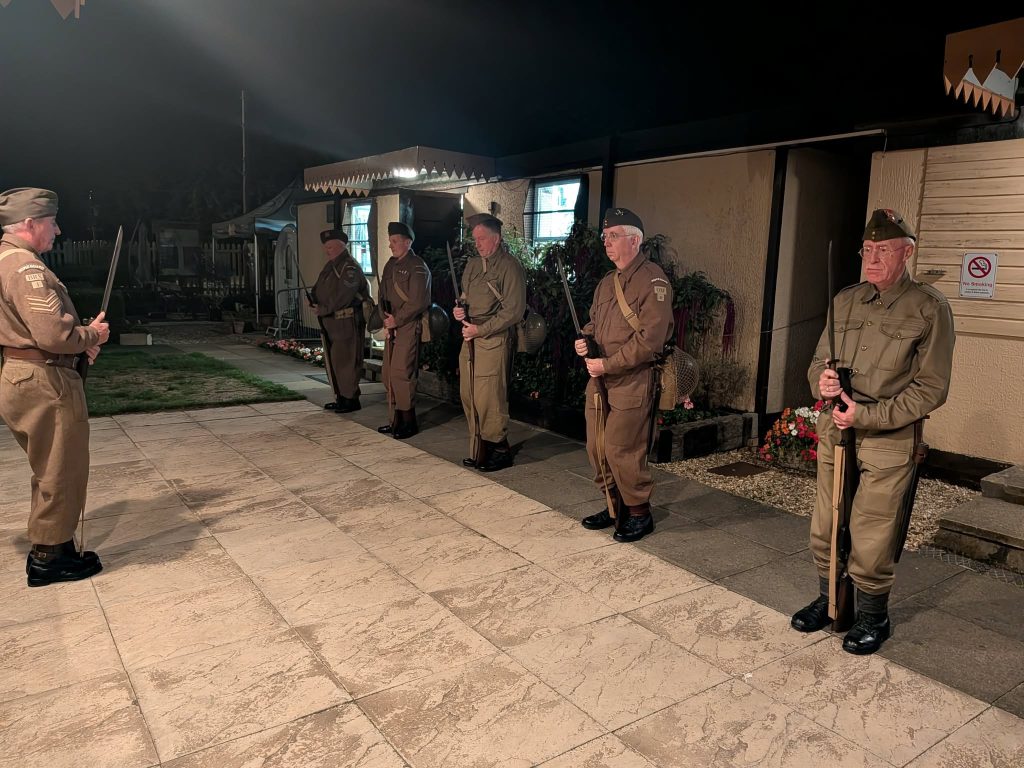
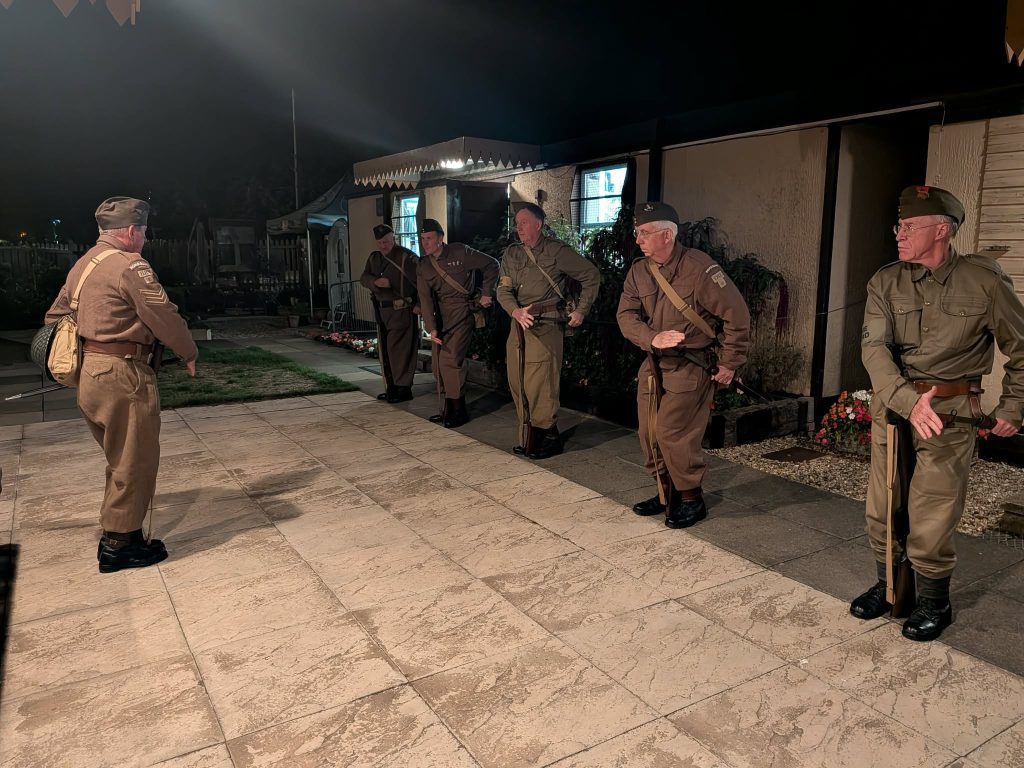
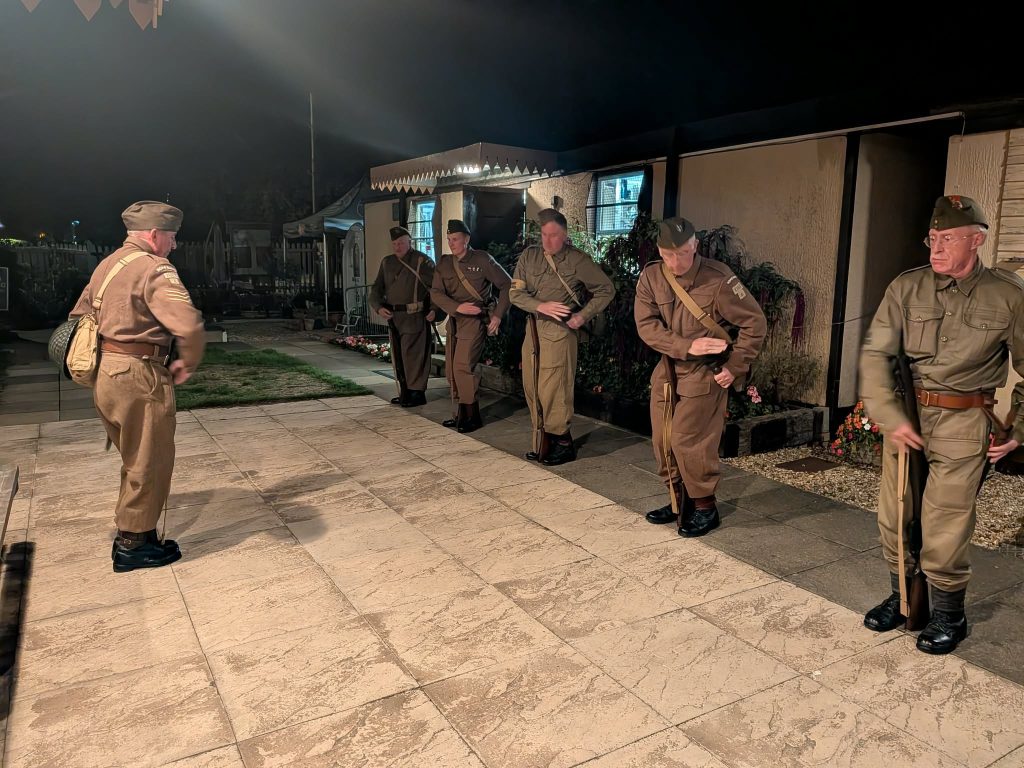
The formal part of the evening concluded with the lowering of the flag, after which the unit retired to The Bell at Crowmarsh Gifford for some well-earned rehydration.
All in all, it was a useful evening for developing and refreshing an important set of skills. Drill builds confidence and pride in appearance, but it also brings the group together – everyone has to work as part of the same team.
Saturday – RAF Stanton Harcourt
Report by Pte Smith
There wasn’t too much time to forget Friday evening’s training, as the following afternoon a small but perfectly formed contingent of five Redline guardsmen headed to RAF Stanton Harcourt for an event marking the 80th anniversary of the airfield’s closure.
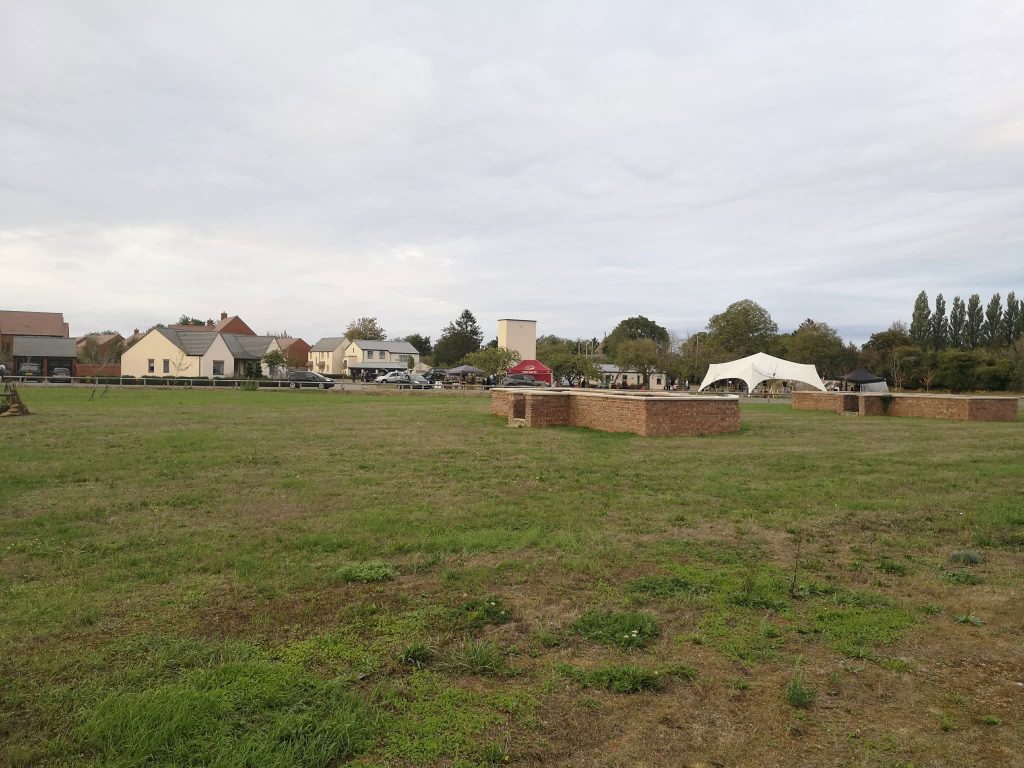
Organised by the local Royal British Legion branch, the event brought together a variety of organisations, including the local Air Cadets, creating an interesting mix of stalls and displays for visitors to explore. A number of Second World War jeeps were also present, adding some period atmosphere to the occasion.
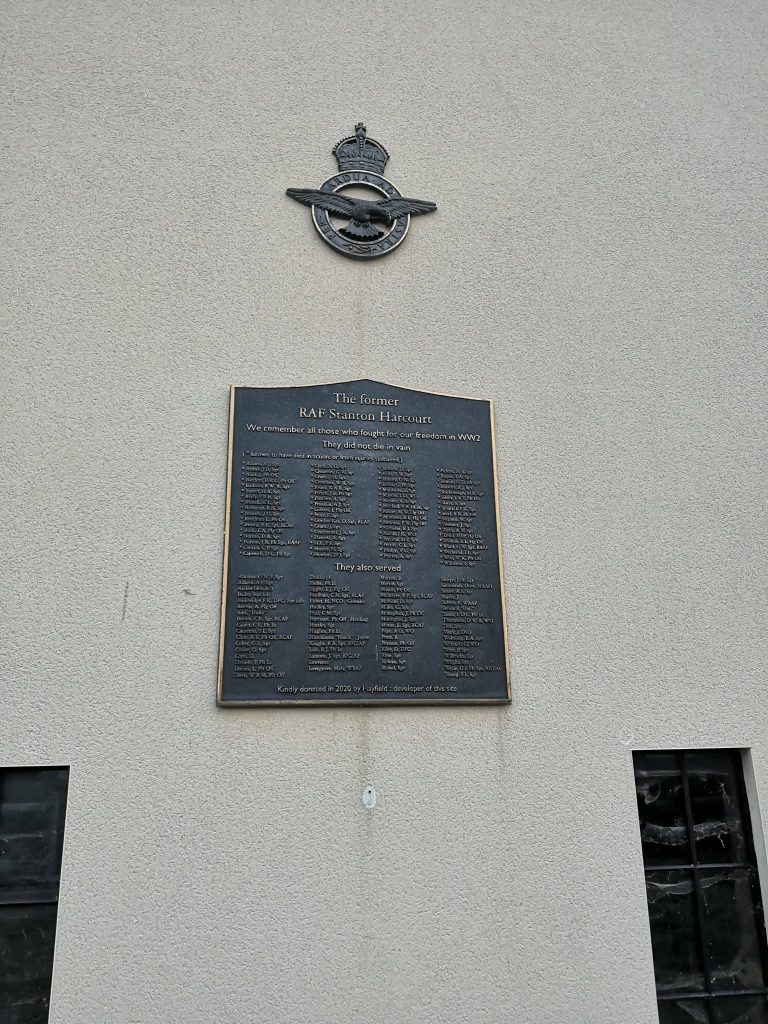
One particularly interesting display told the history of RAF Stanton Harcourt, which operated as a satellite to RAF Brize Norton. Built in 1940 – and bombed while still under construction – the airfield went on to serve as a base for bomber units during the war. Another fascinating stall displayed the mangled remains of a crashed Bristol Beaufighter.
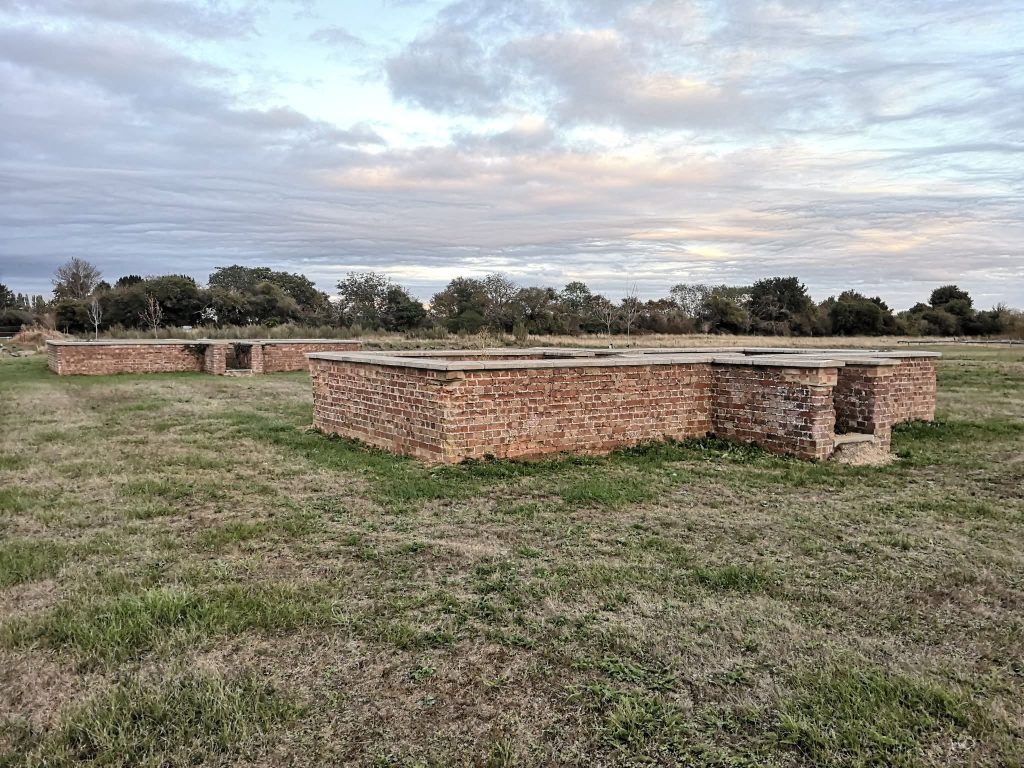
Several of the original airfield buildings still survive, including the former gatehouse, which had been put to good use during the event as the all-important bar! There was also a fascinating display covering the Special Operations Executive and Home Guard Auxiliaries by legendary local historian Bill King.
The Red Line unit was based across the road from the main event area, within and alongside one of the three surviving brick airfield ‘splinter’ shelters.
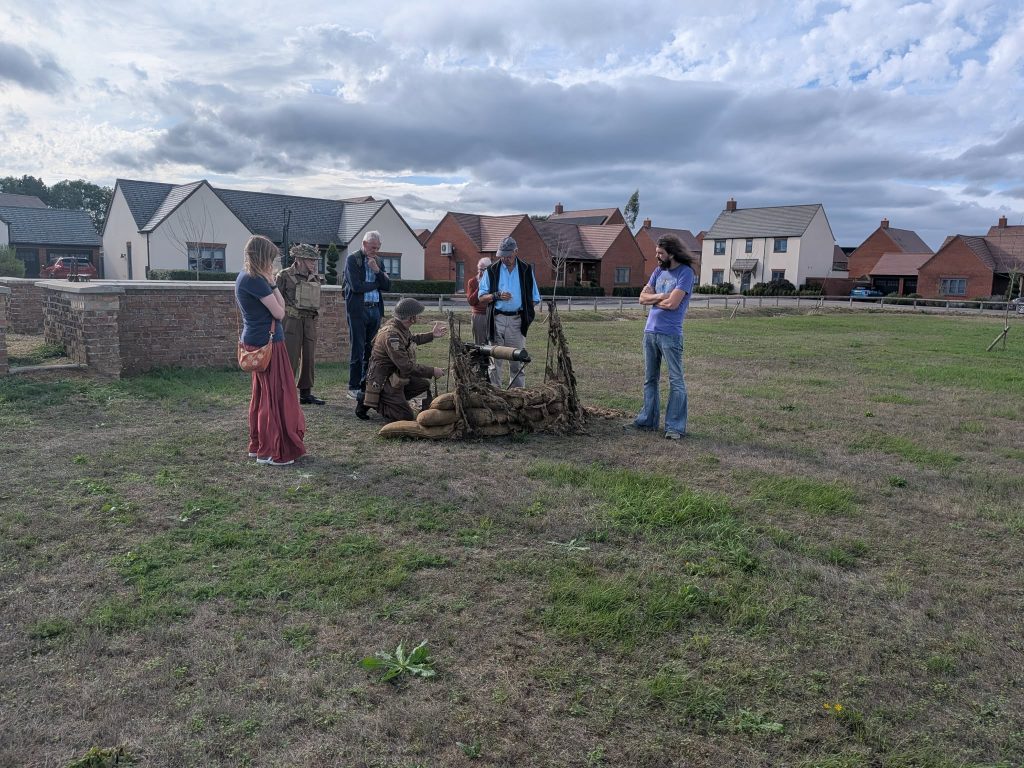
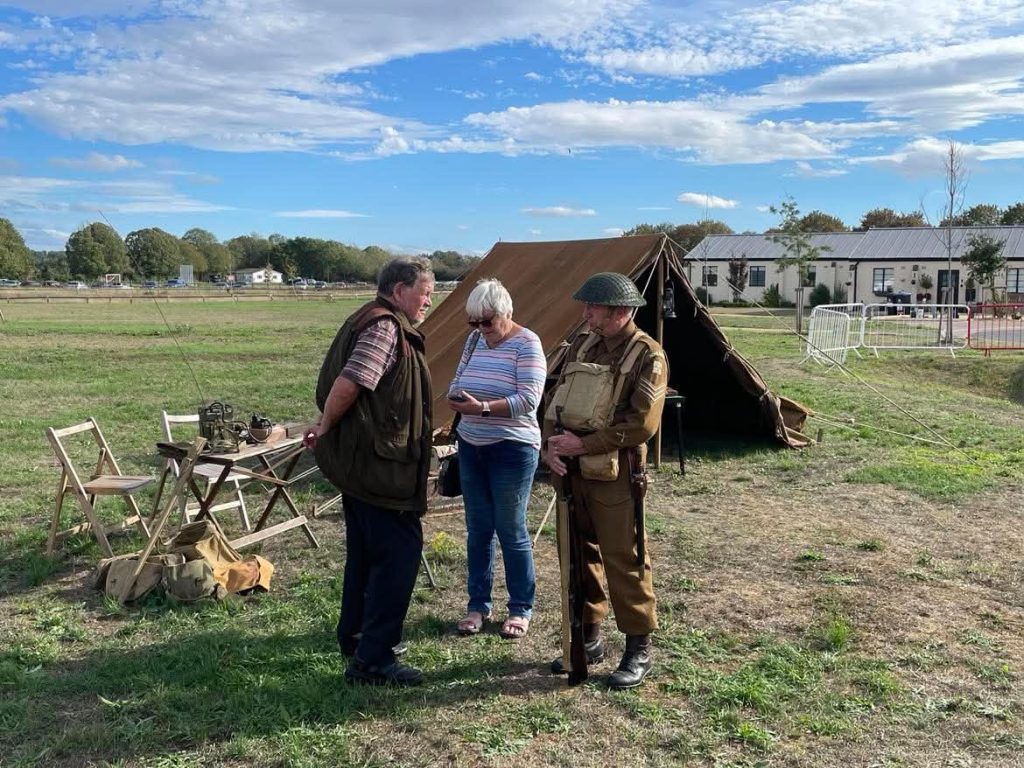
We erected our tent outside, complete with officer’s desk and a separate communications post, while the Vickers machine gun was positioned nearby in site-protection mode. Inside the shelter, two Bren guns on tripods were set up to provide anti-aircraft protection.
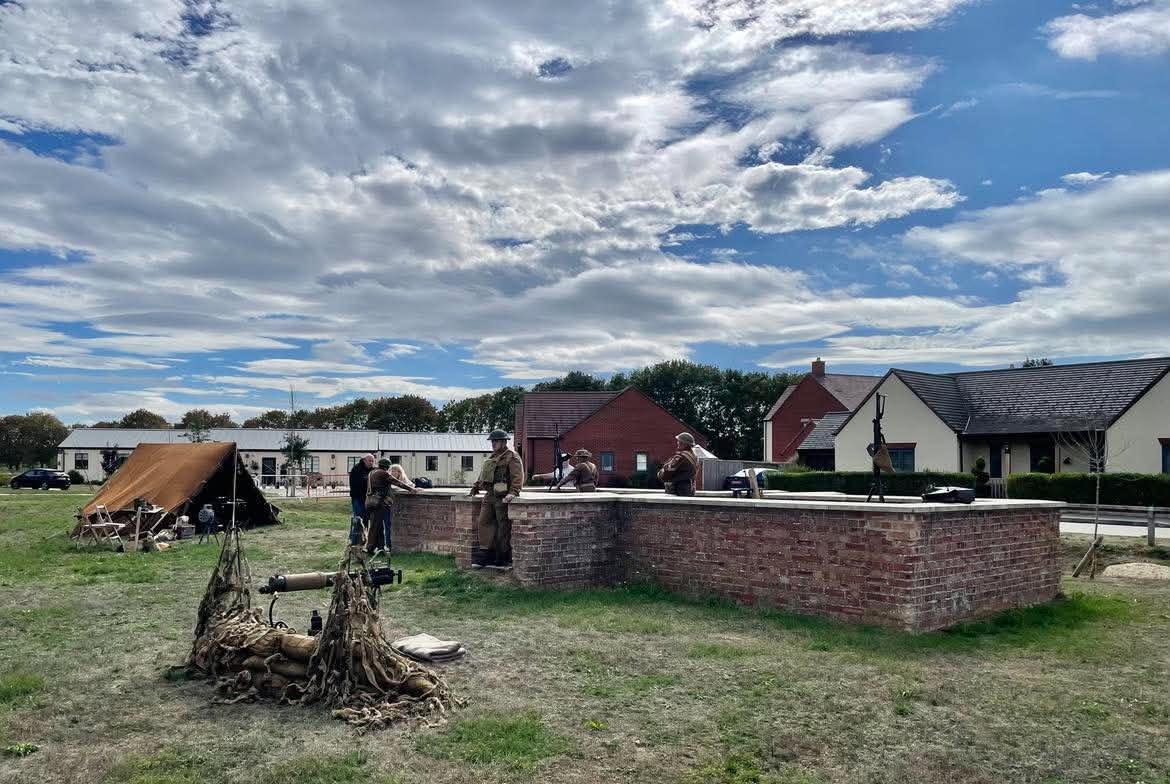
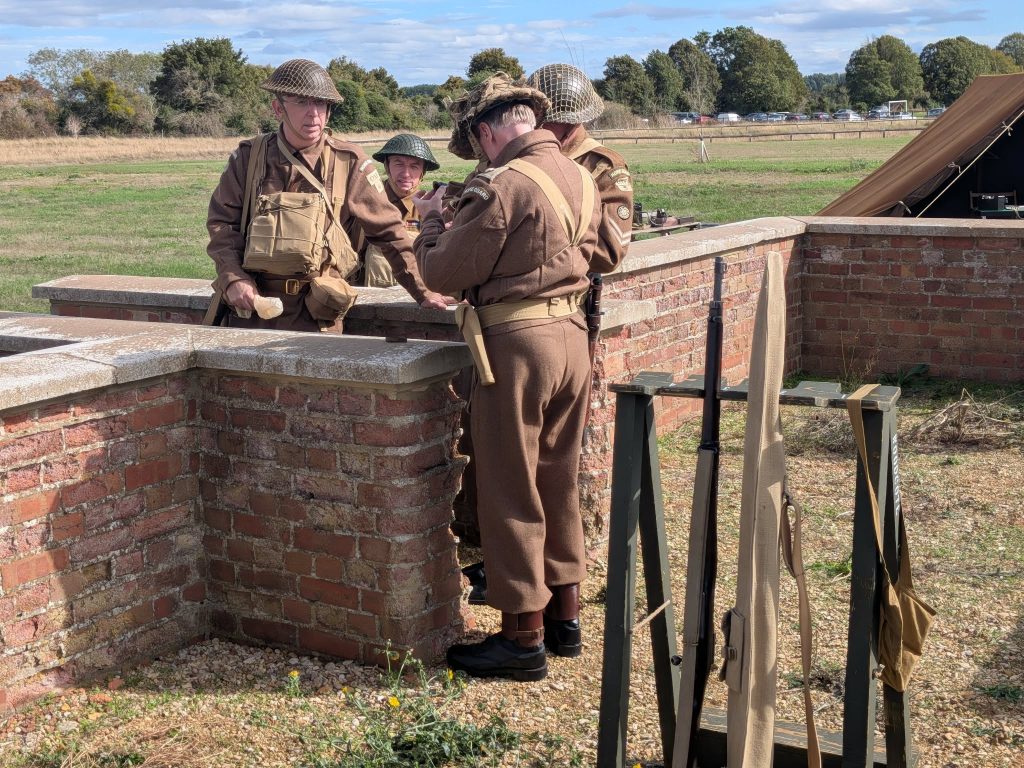
Every so often our Platoon Sergeant, Sgt Quigley, would sound the air-raid siren accompanied by a shout to ‘stand to’, sending the unit running to its prepared positions until the ‘all clear’ was given.
The unmistakable sound of the wartime siren carried well beyond our position and must have been particularly noticeable – and perhaps rather poignant – for those attending the event and residents living nearby.
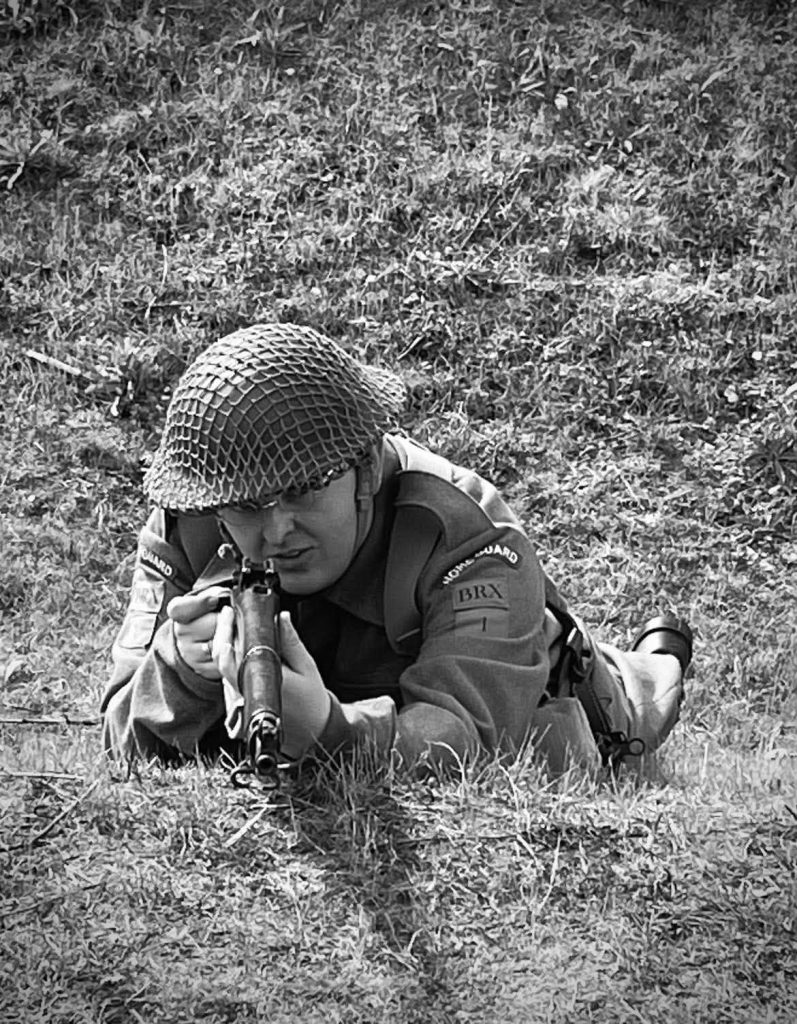
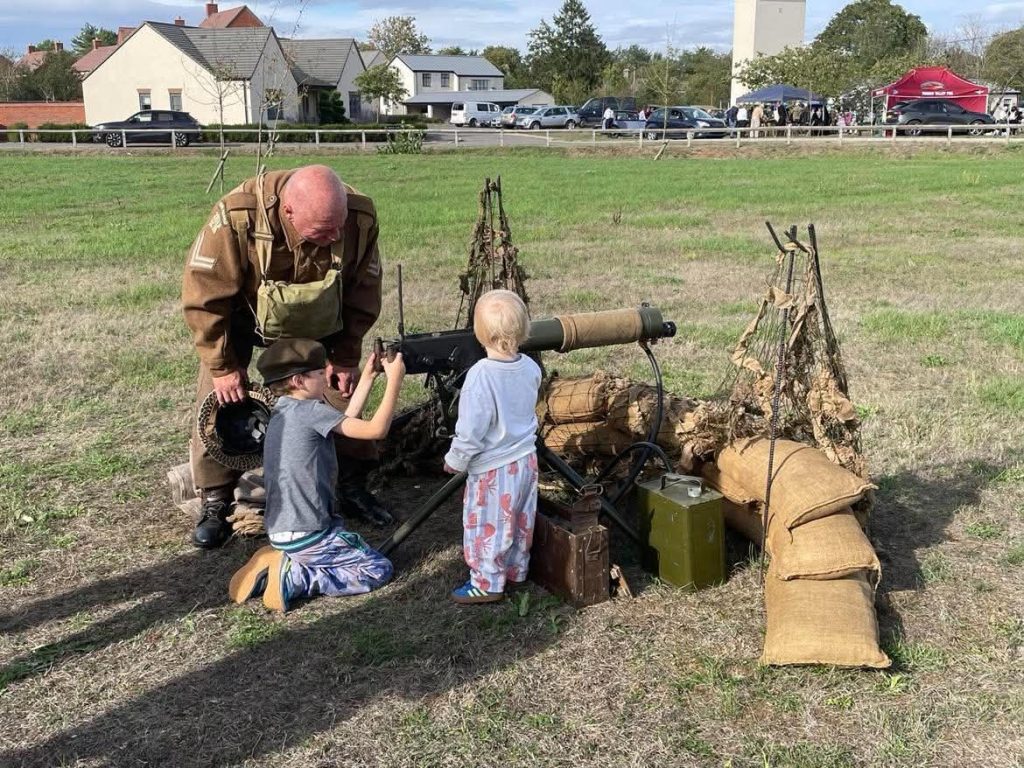
There was plenty of good-natured banter throughout the afternoon, both amongst ourselves and with the many veterans attending the event. Just as importantly, we had some excellent interaction with members of the public, talking them through the story of the Home Guard and explaining the wide variety of weapons and equipment on display.
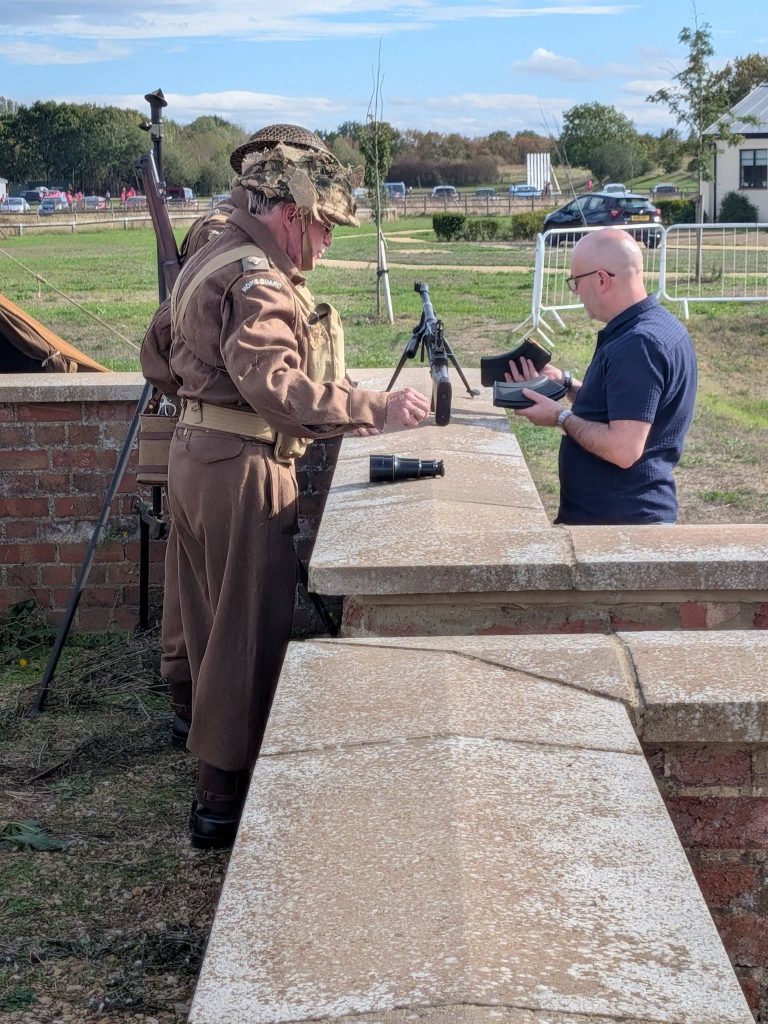
As is so often the case, the Vickers proved a particular hit and prompted plenty of questions and conversations.
It was a thoroughly enjoyable afternoon at a location with a fascinating wartime history and a fitting way to help commemorate the 80th anniversary of the closure of RAF Stanton Harcourt.
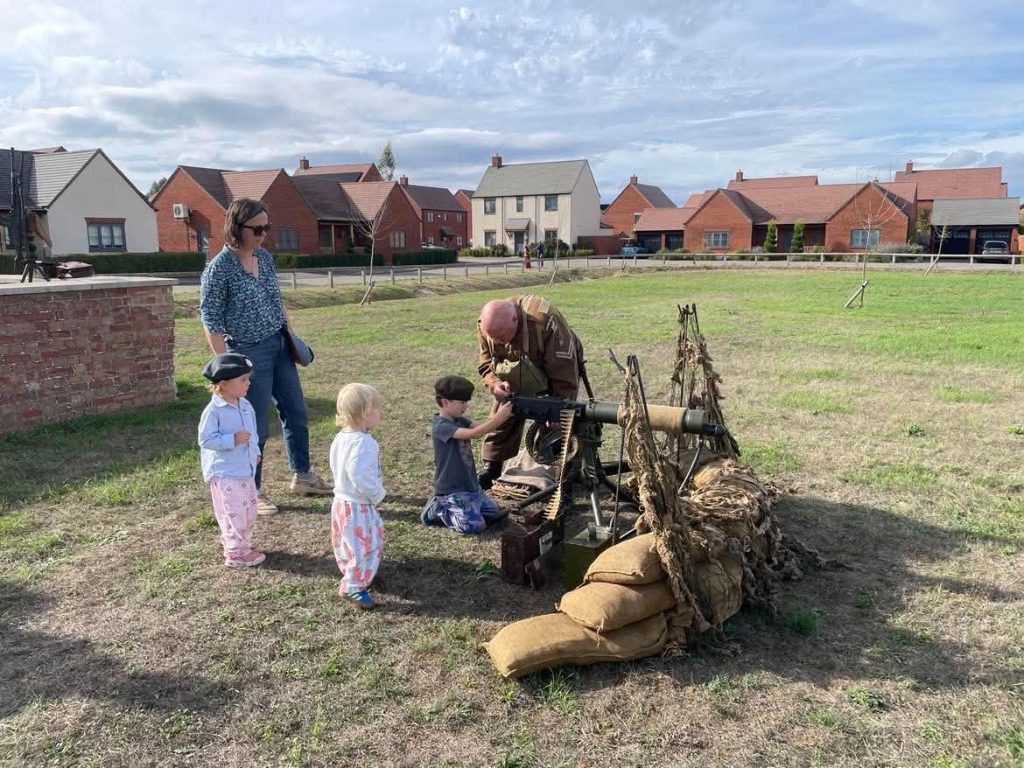
Combined with Friday evening’s training session, it made for a busy but rewarding couple of days for the Redline – practising the skills and standards we aim to maintain as a unit before putting our living-history interpretation into practice with the public the following day.
No responses yet