
Back at South Stoke Village Hall, the platoon gathered once more for an evening of steady and purposeful training. As is customary, the night began with a restorative cup of tea and the usual exchange of news before we moved into drill. Rifle movements, turns on the march and general steadiness were all put through their paces. Regular drill remains fundamental to what we do. It sharpens discipline, improves confidence under command and ensures that when we parade publicly, we do so with precision. The overall standard continues to improve, and it is encouraging to see members increasingly comfortable both taking instruction and stepping forward to deliver it.
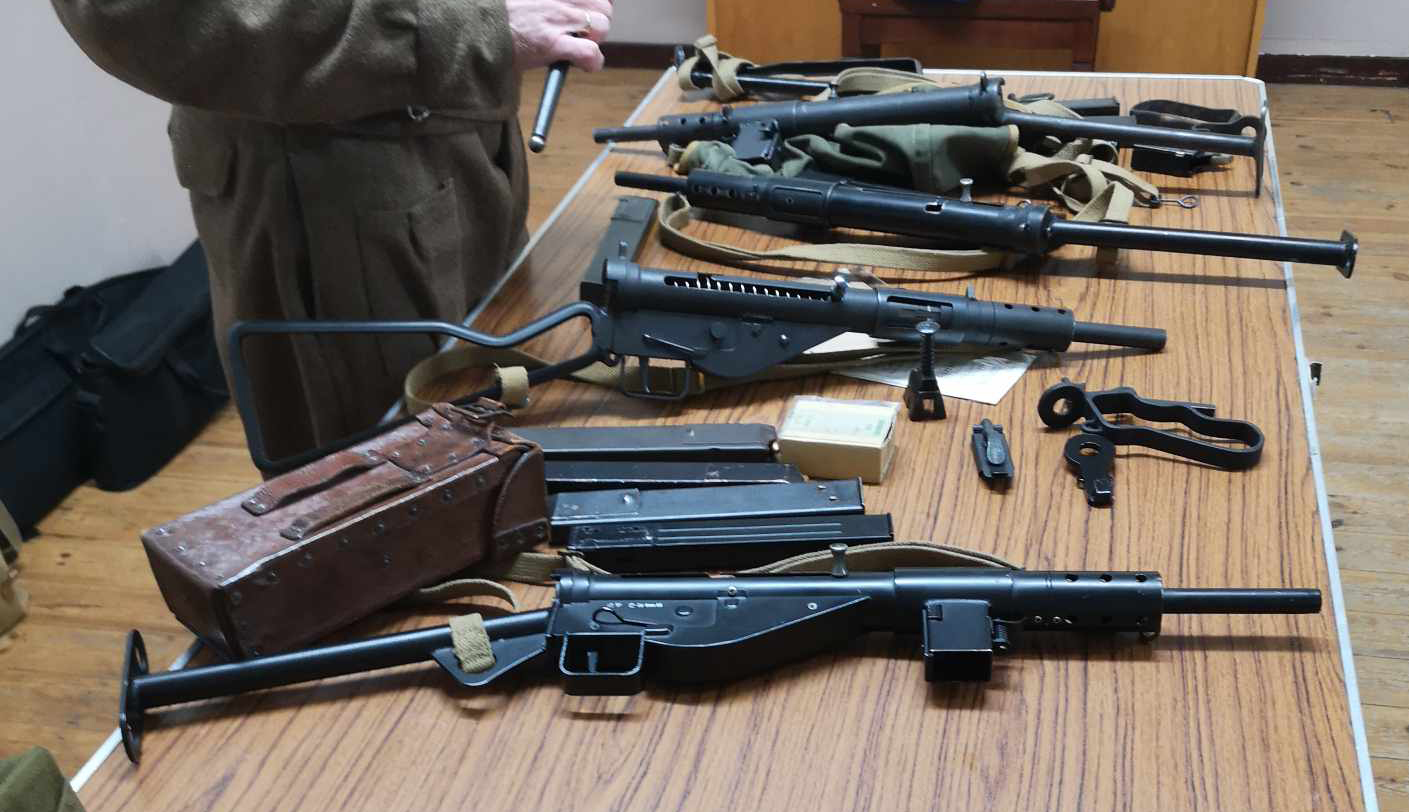
With the formalities complete, attention turned to the evening’s main subject, the Sten submachine gun. We began by watching an informative film covering the weapon’s origins and rapid development. Designed in 1940 in the aftermath of Dunkirk, when Britain faced a critical shortage of small arms, the Sten was conceived as a weapon that could be produced quickly and cheaply in enormous numbers. Its name derives from its principal designers, Major Reginald Shepherd and Harold Turpin, with the final letters taken from Enfield (home of the Royal Small Arms Factory) or from England – the jury is out on which is correct.
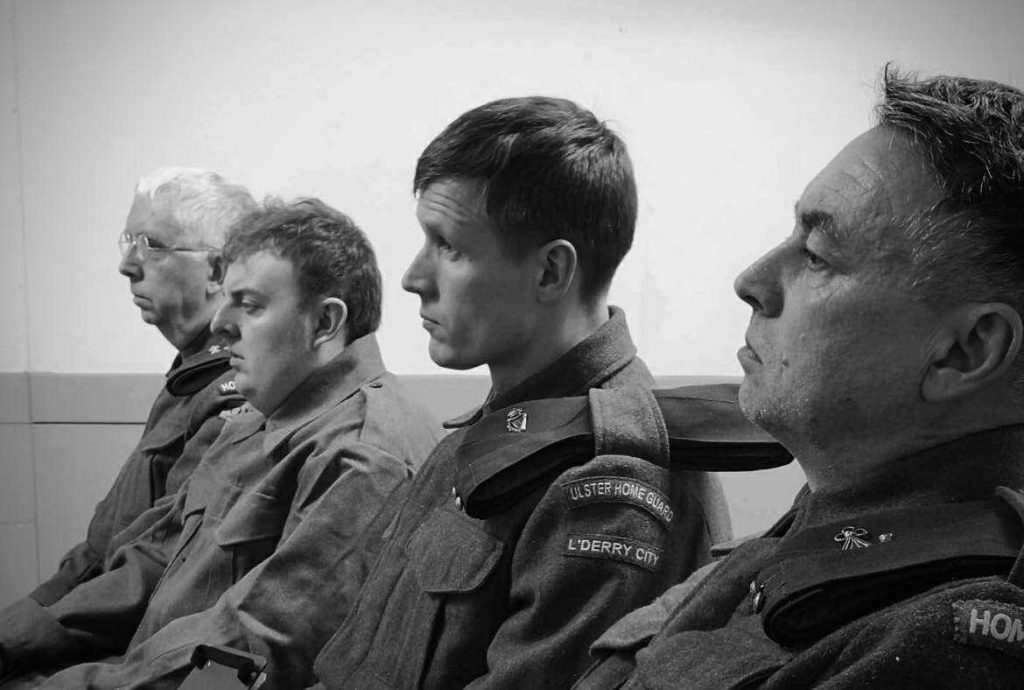
The film set out the stark practicality of the design. Chambered in 9×19mm Parabellum and operating on a simple open bolt blowback system, the Sten fed from a side mounted detachable box magazine. Its rate of fire sat at roughly 500 to 550 rounds per minute. Perhaps most remarkable was the cost, at approximately £2.50 per unit at peak wartime production, a figure that reflects just how radically the design prioritised speed and simplicity over refinement. By the end of the war, more than four million examples had been produced across several marks, with the Mk II becoming the most recognisable variant.
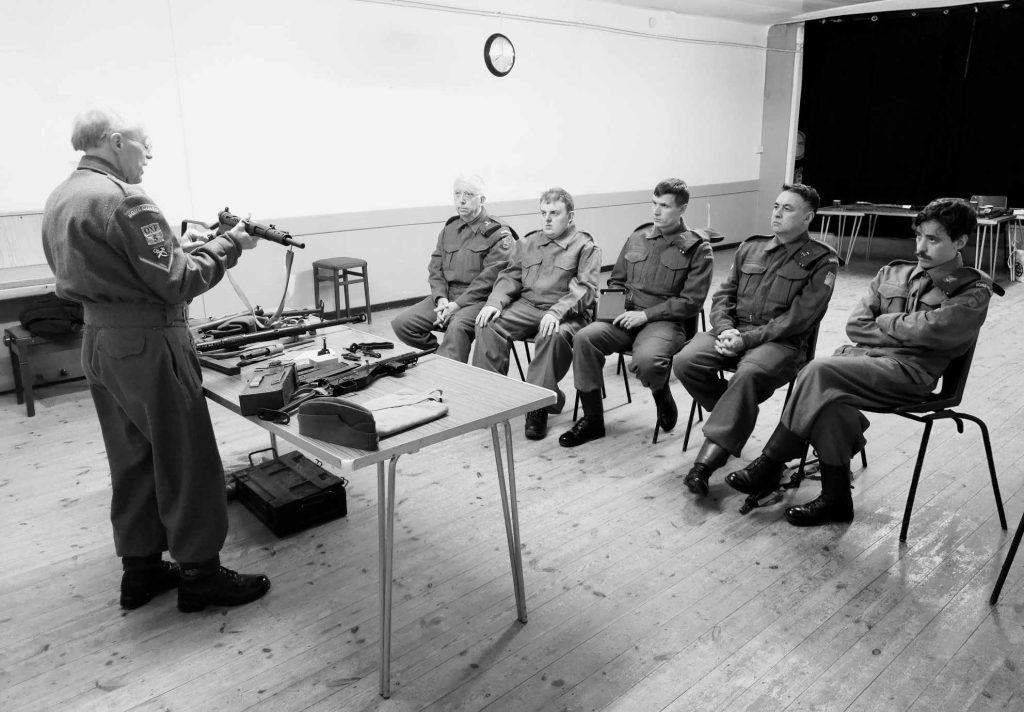
Following the film, 2/Lt Chambers and Pte Smith led a practical demonstration. They carefully walked through the principal components of the weapon, explaining the function of the bolt assembly and recoil spring, and outlining how the open bolt system operates. The session covered safe handling, field stripping and reassembly, along with discussion of magazines, ammunition and period accessories. Seeing the Sten broken down into its constituent parts reinforces how uncompromisingly functional the design is. It lacks the machining elegance of earlier firearms, yet its very simplicity was its strength at a time when Britain required rapid rearmament.
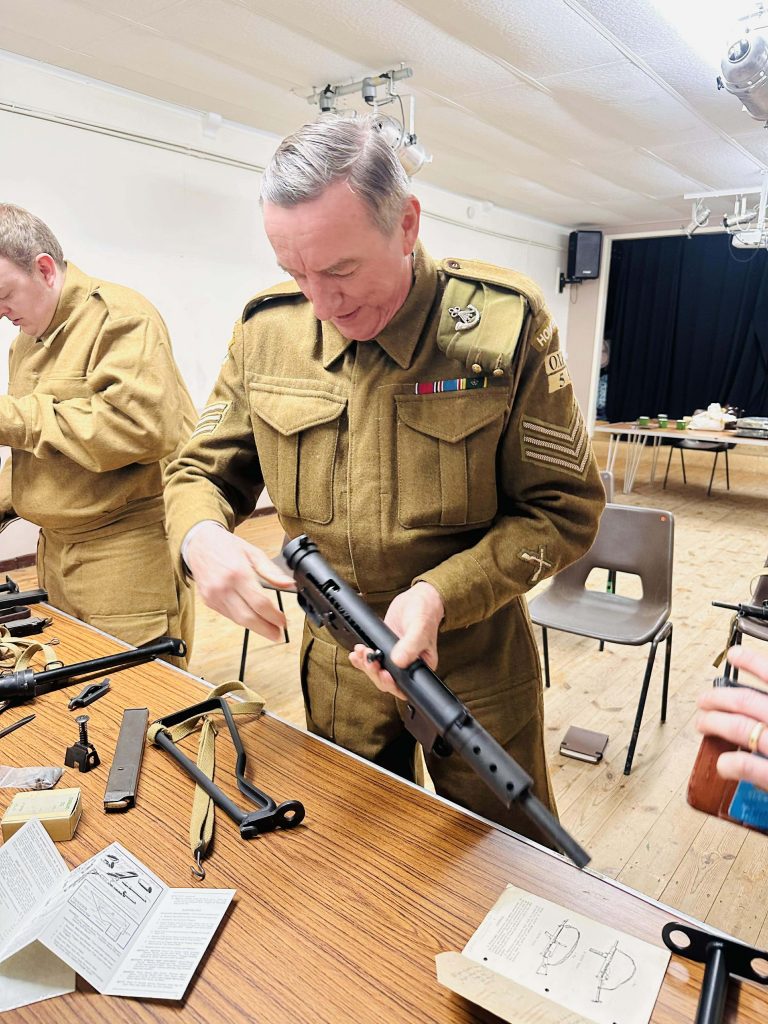
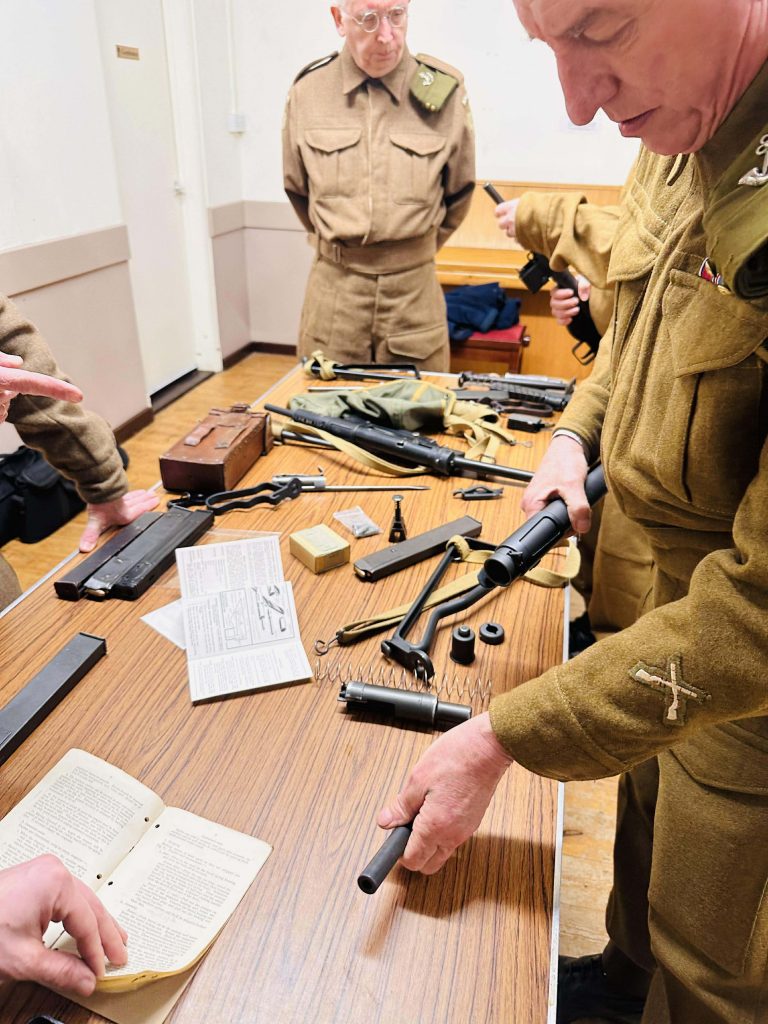
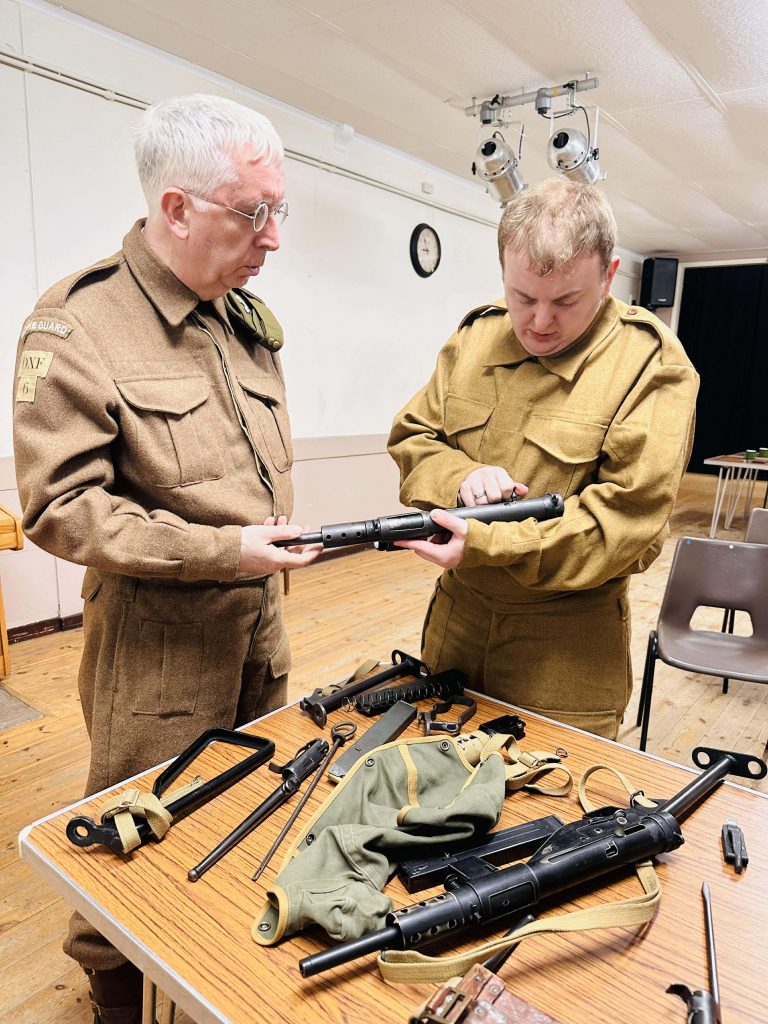
For the Home Guard, the Sten represented an important shift from the early, improvised days of the war. By 1941 and 1942, increasing numbers of units were issued with Stens, giving them a credible automatic capability and moving them beyond the stopgap measures of the invasion scare period. Understanding both the mechanical and historical context of the weapon strengthens our interpretation and ensures it remains grounded in fact.
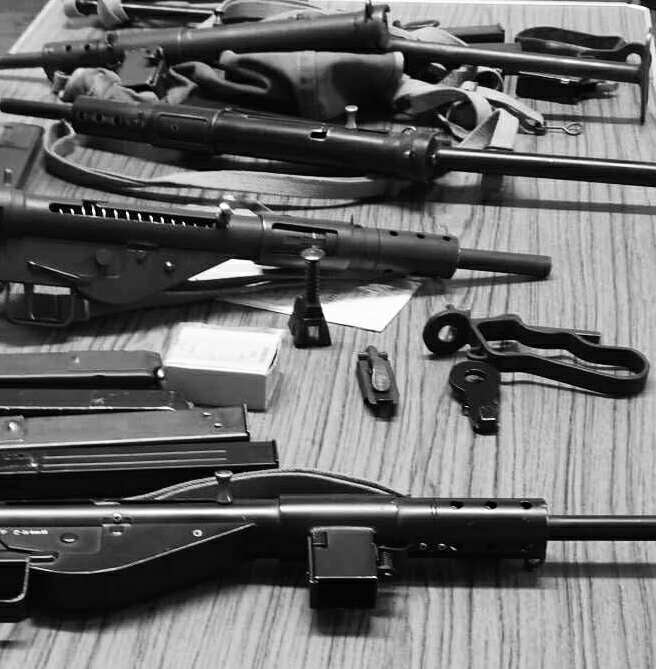
It was, in all, a productive and focused evening. Solid drill, detailed historical context and practical examination combined to make the session both informative and worthwhile. South Stoke once again proved an excellent venue, and the platoon retired for refreshment to the nearby Perch and Pike and having added another layer of depth to its understanding of the equipment and the men who relied upon it.
No responses yet