
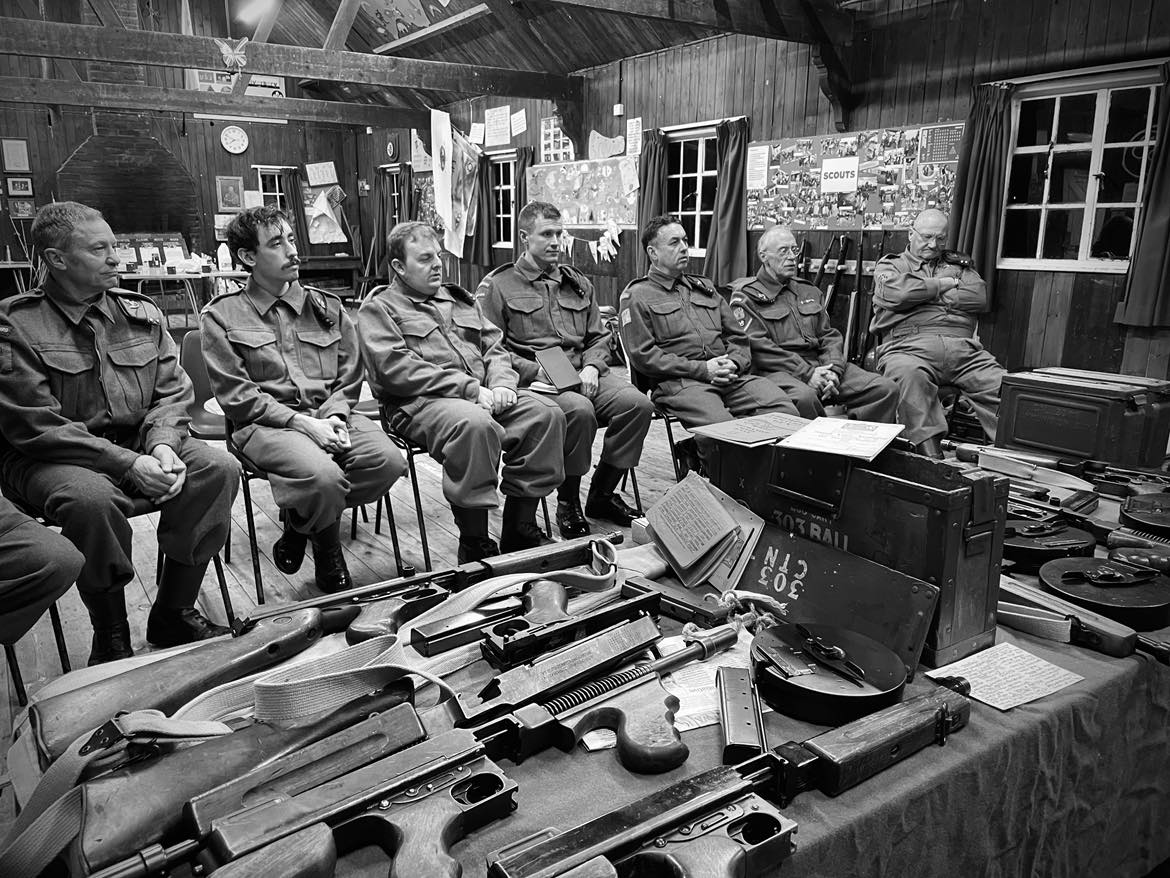
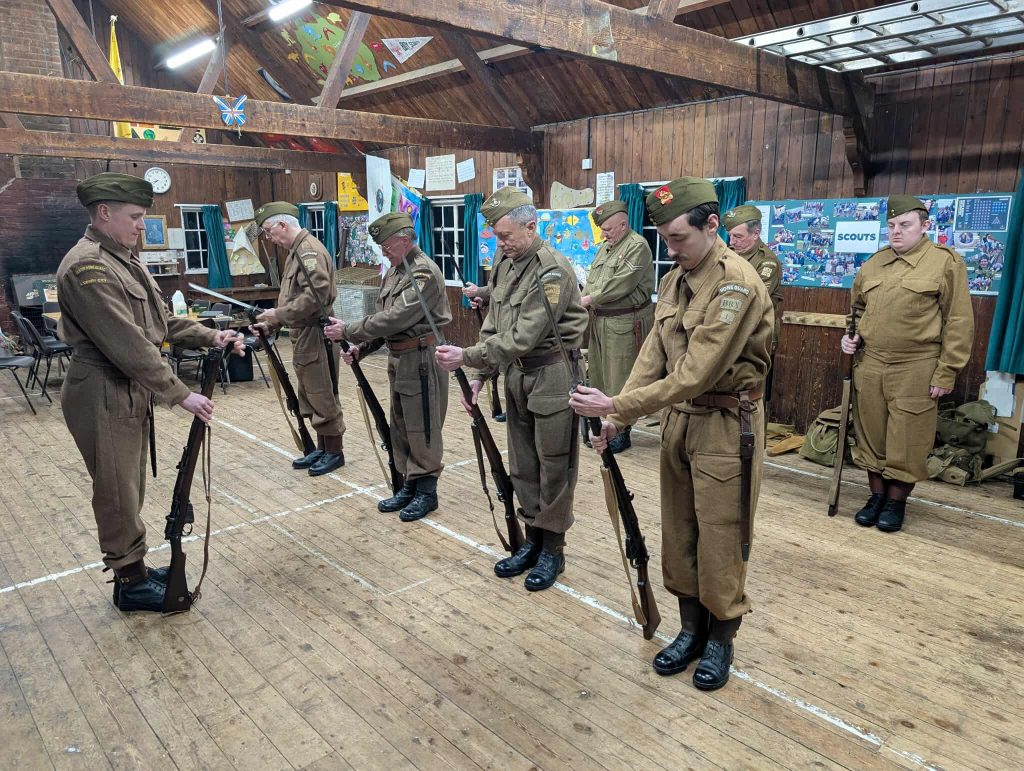
Last night’s Home Guard training session followed a familiar and welcome rhythm. After the customary cuppa, we moved straight into parade drill, and it is fair to say the squad is really coming on. Confidence and sharpness are improving each week, and it is encouraging to see newer members stepping forward.
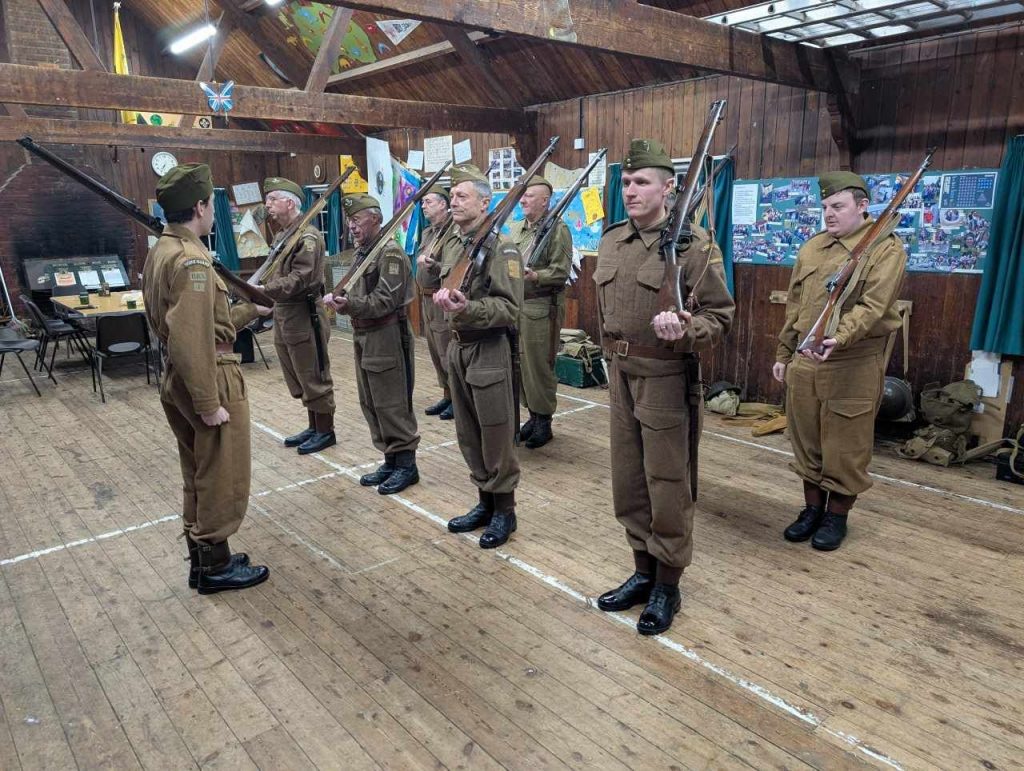
Drill was led in turn by Pte H. Gleave, Pte Gourley and Pte Smith, each taking the squad through its paces. Rotating leadership like this is an important part of our development. It builds authority, projection of command, and an understanding of how to control movement and timing across the section. All three handled the responsibility well, and the standard continues to rise.
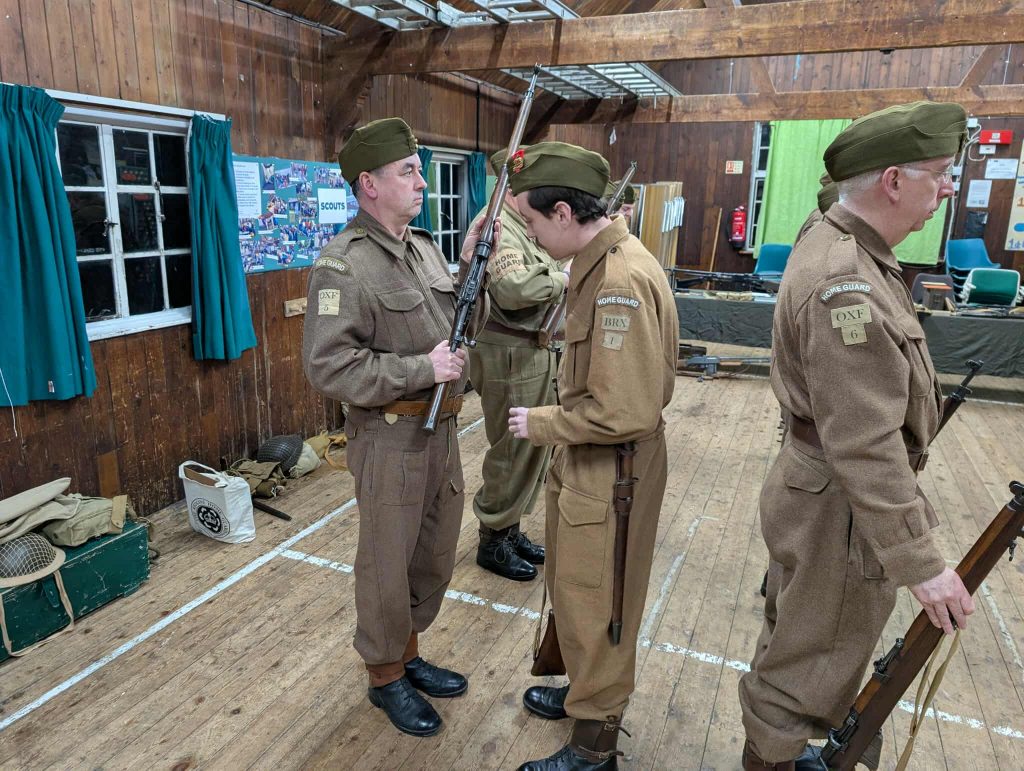
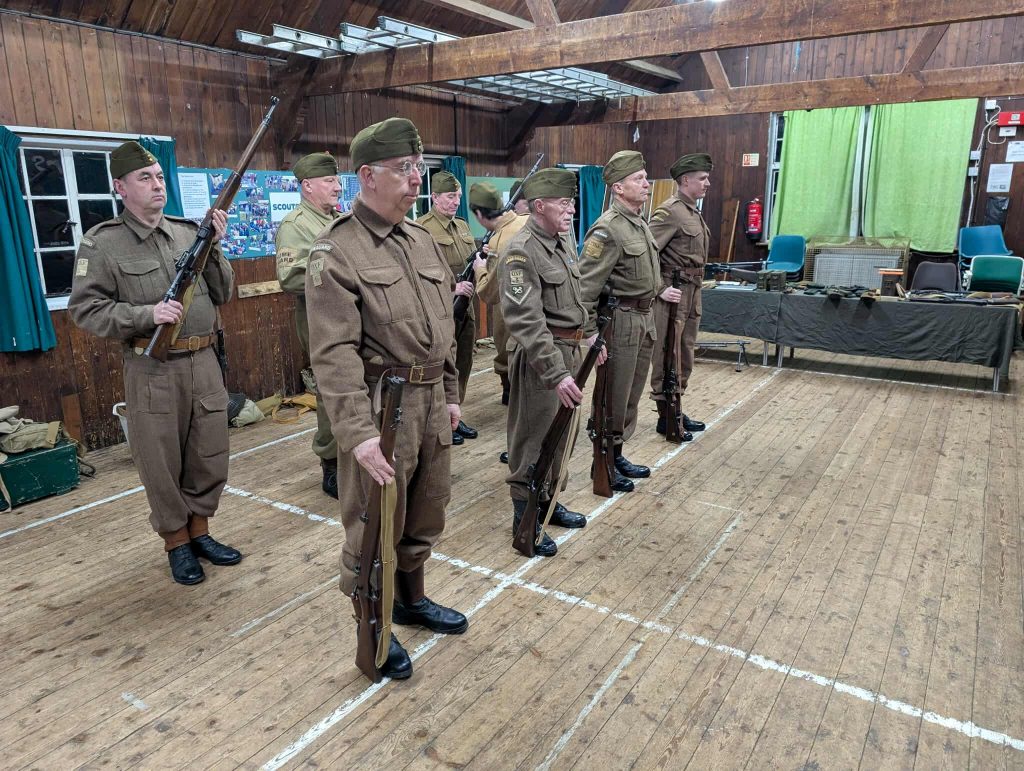
The main instructional focus of the evening centred on two further Home Guard weapons, the Browning Automatic Rifle and the Thompson submachine gun.
Sgt Quigley opened with the history of the Browning Automatic Rifle, better known as the B.A.R. Designed by John Browning in 1917 and chambered in .30-06, the B.A.R. was conceived as a ‘walking fire’ weapon during the latter stages of the Great War. By the Second World War, the M1918A2 variant was in service, firing from a 20-round detachable box magazine at a cyclic rate of around 500–650 rounds per minute. Although heavy at just over 8 kg, it provided a section with substantial automatic firepower. Sgt Quigley then moved from history to practice, demonstrating the principal components, operating system, and general handling characteristics of the weapon, giving everyone a clear understanding of its role and limitations.
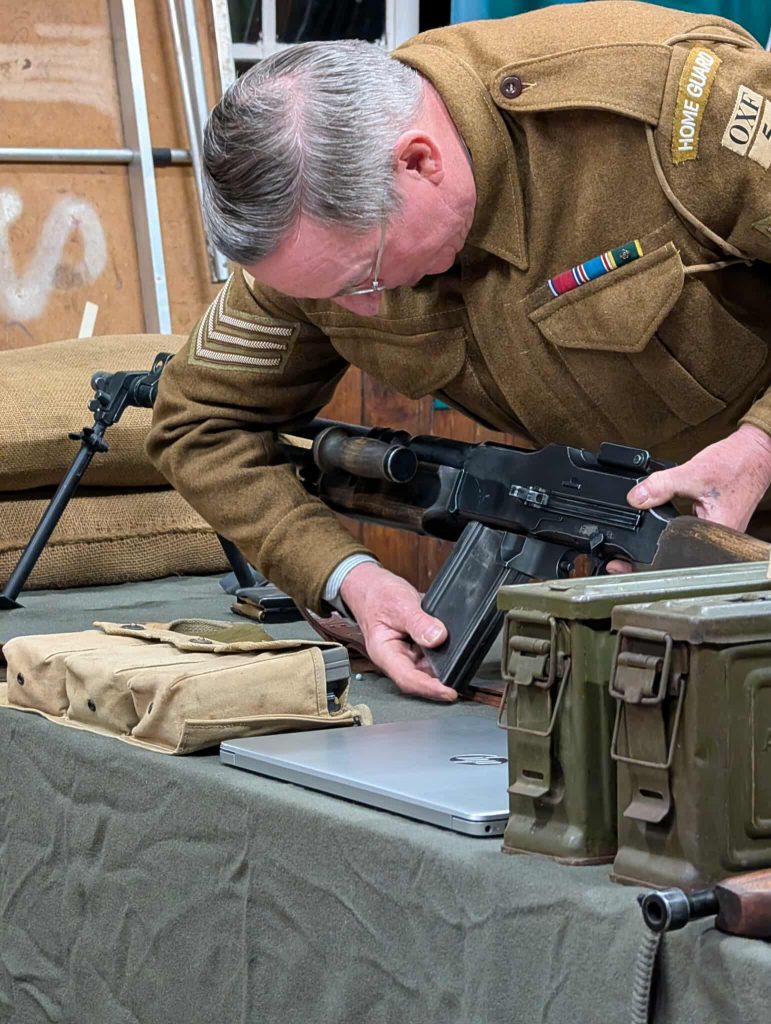
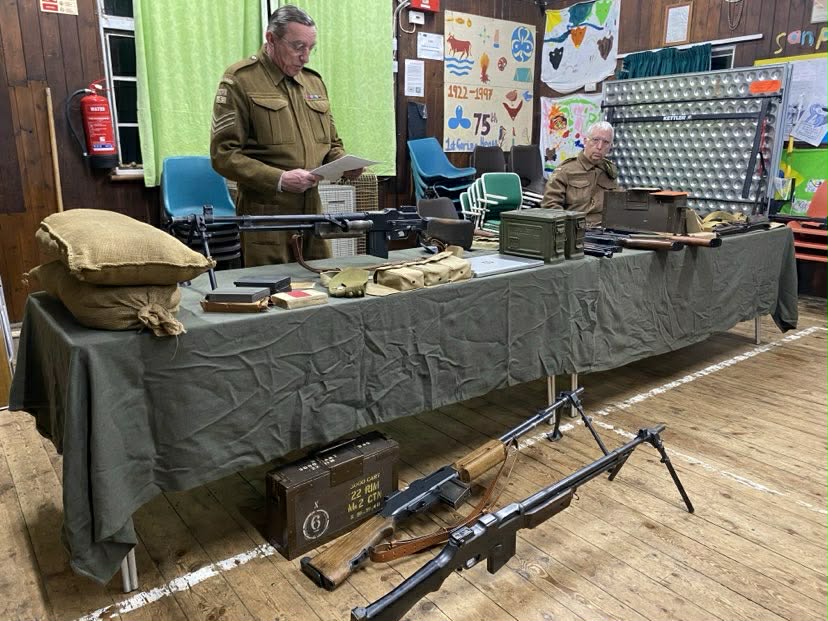
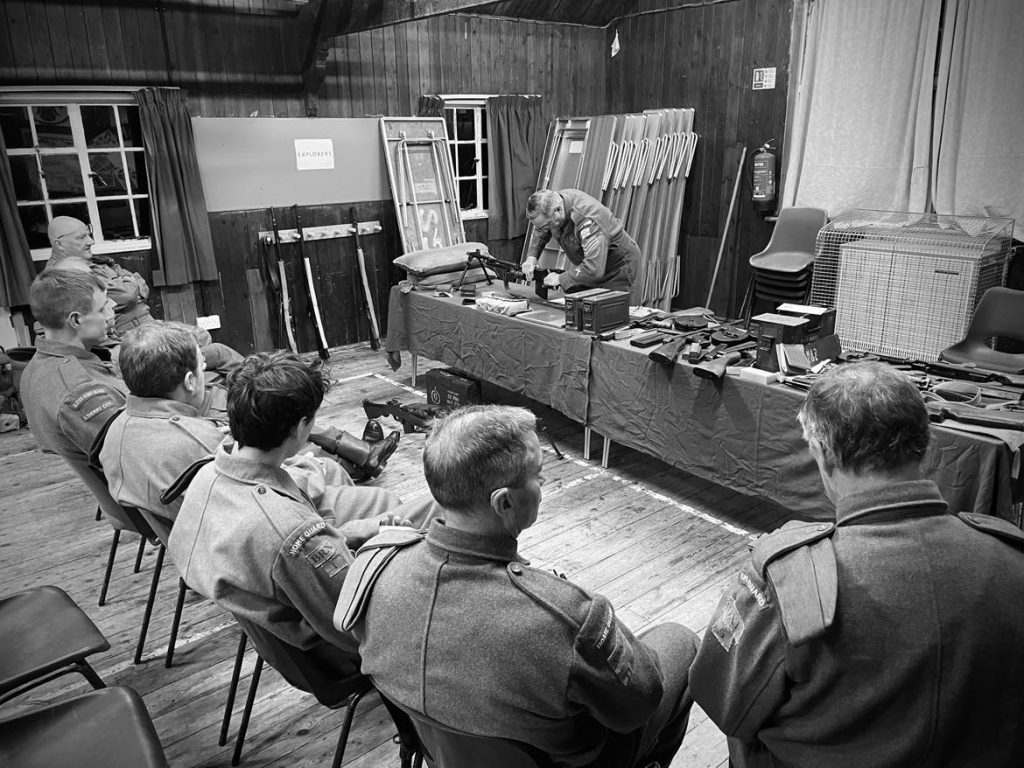
The second half of the session was led by Pte Smith, who delivered a comprehensive session on the Thompson submachine gun. Beginning with its origins in the early 1920s under General John T. Thompson, he outlined the development from the early 1921 and 1928 models, with their distinctive Cutts compensators and drum magazines, through to the simplified wartime M1 and M1A1 variants. Chambered in .45 ACP and typically fed from 20- or 30-round box magazines, the Thompson offered controllable automatic fire at close quarters.
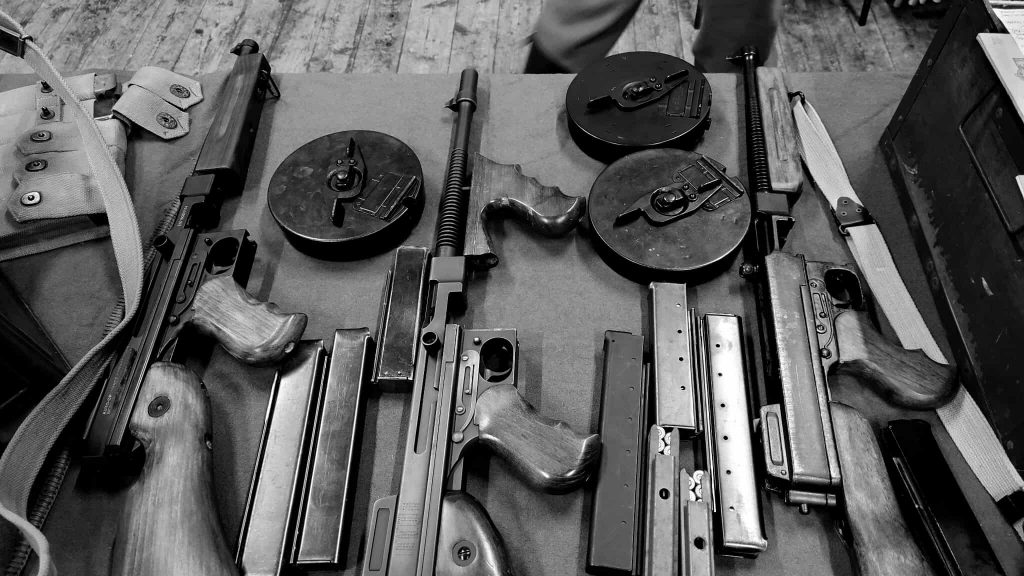
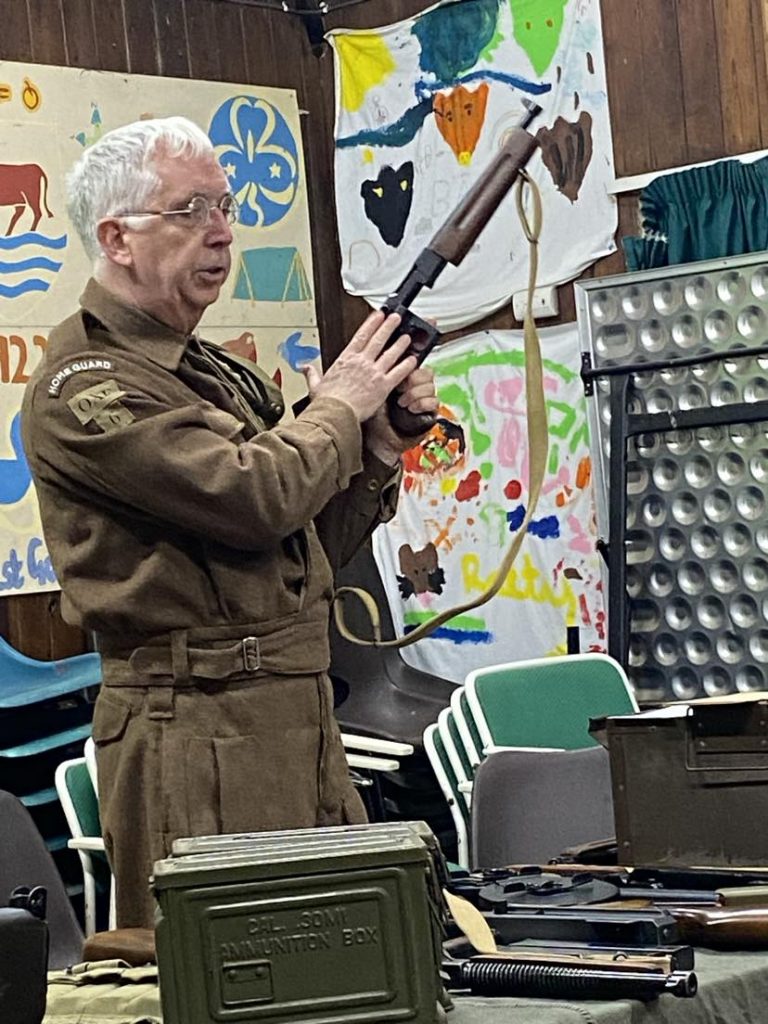
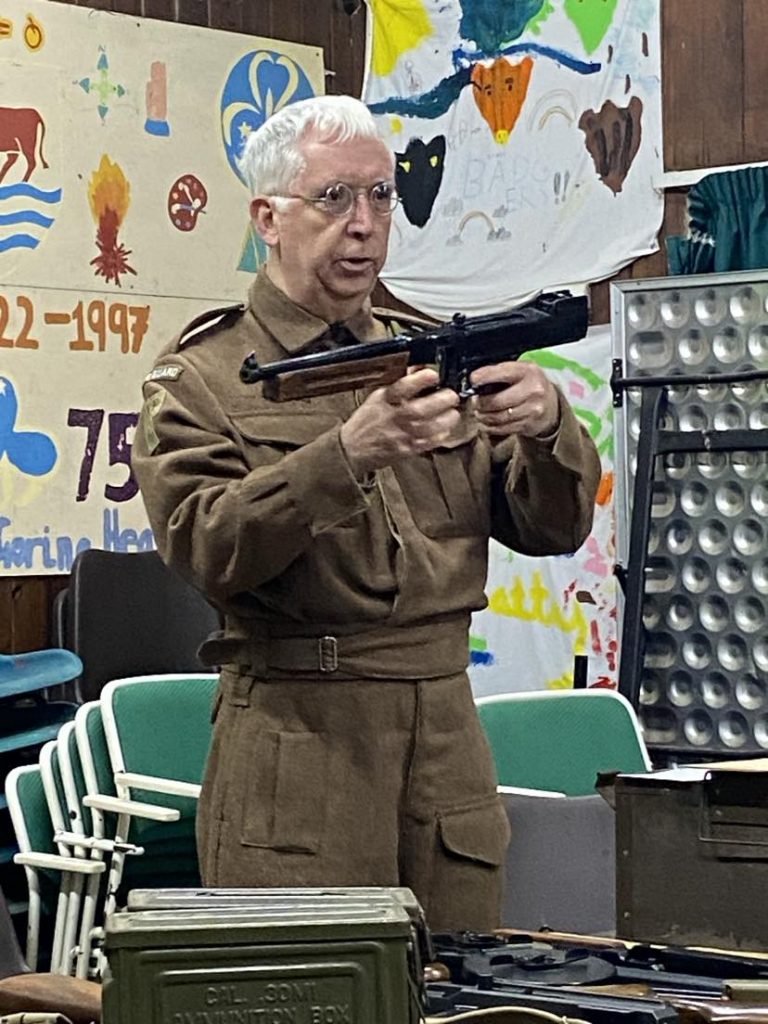
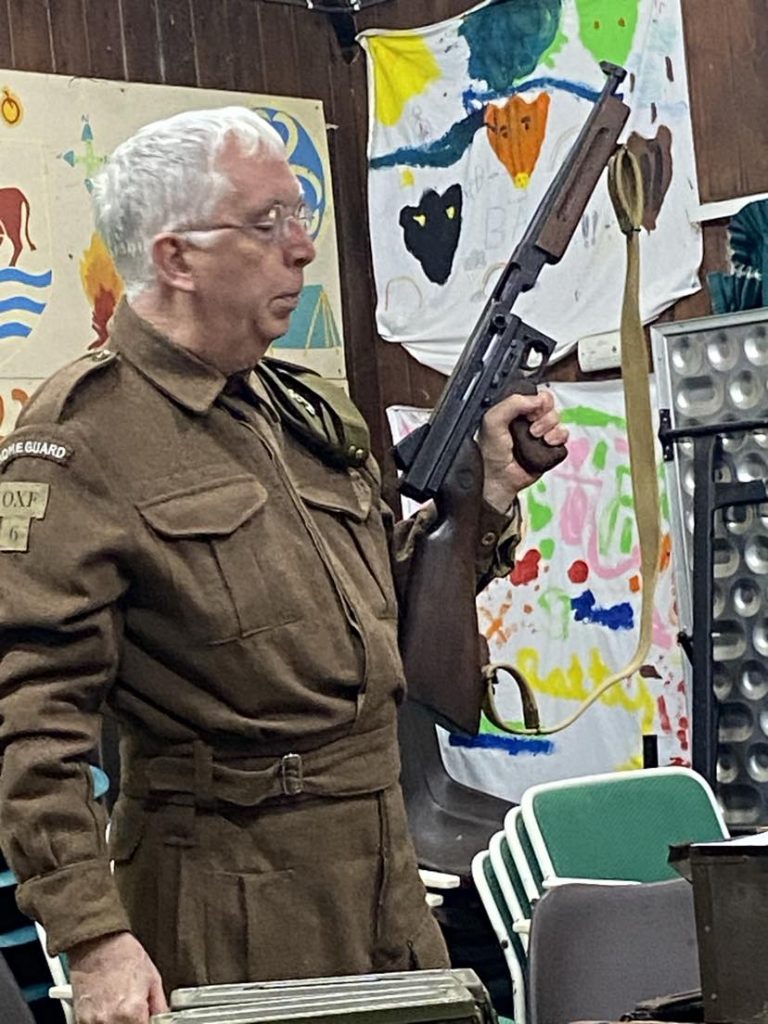
Pte Smith then demonstrated the main parts of the weapon, explained the correct stripping procedure, and talked through stoppage drills and magazine loading procedures. The emphasis, as always, was on safe handling, mechanical understanding, and historical accuracy in how the weapon would have been employed.
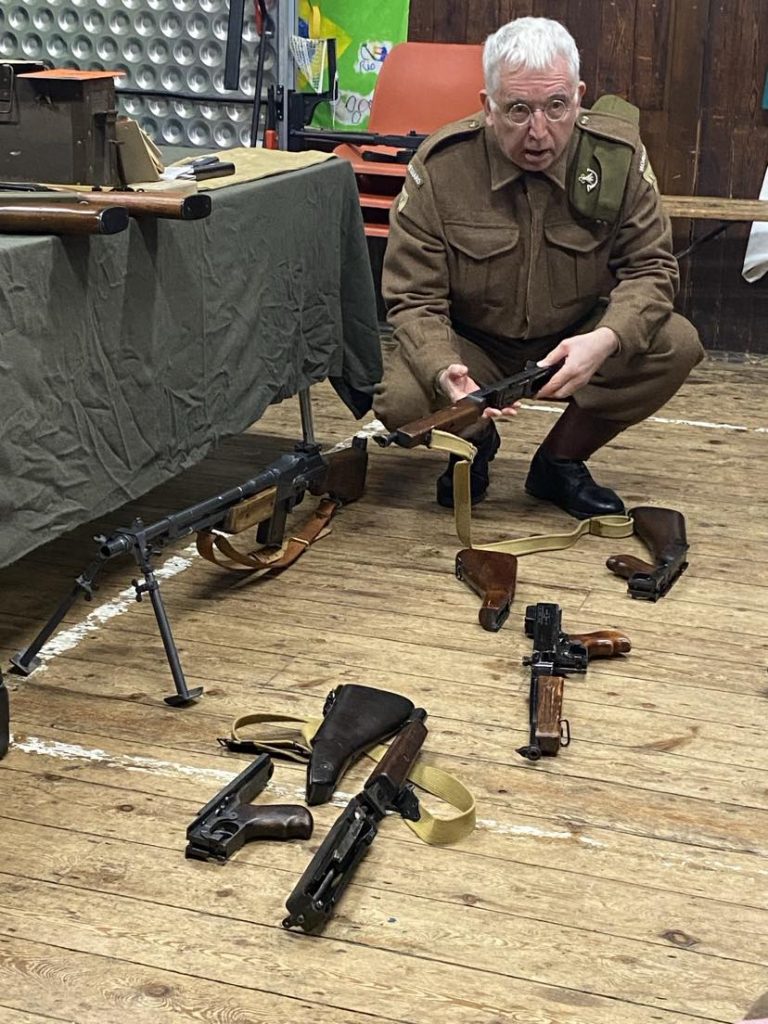
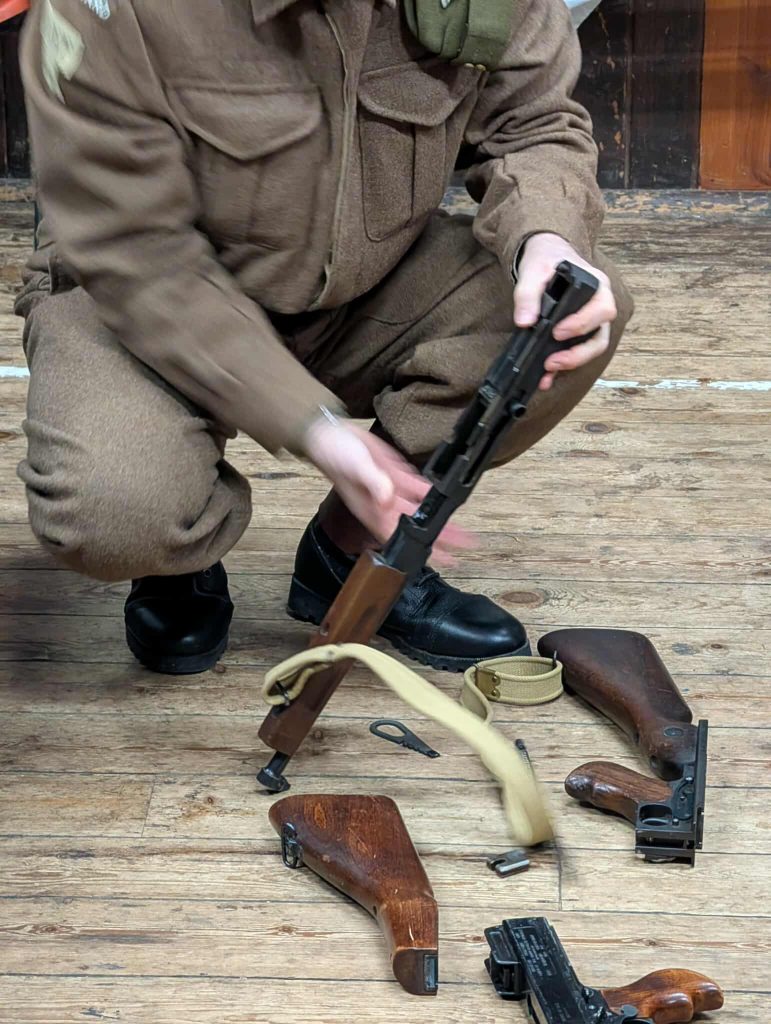
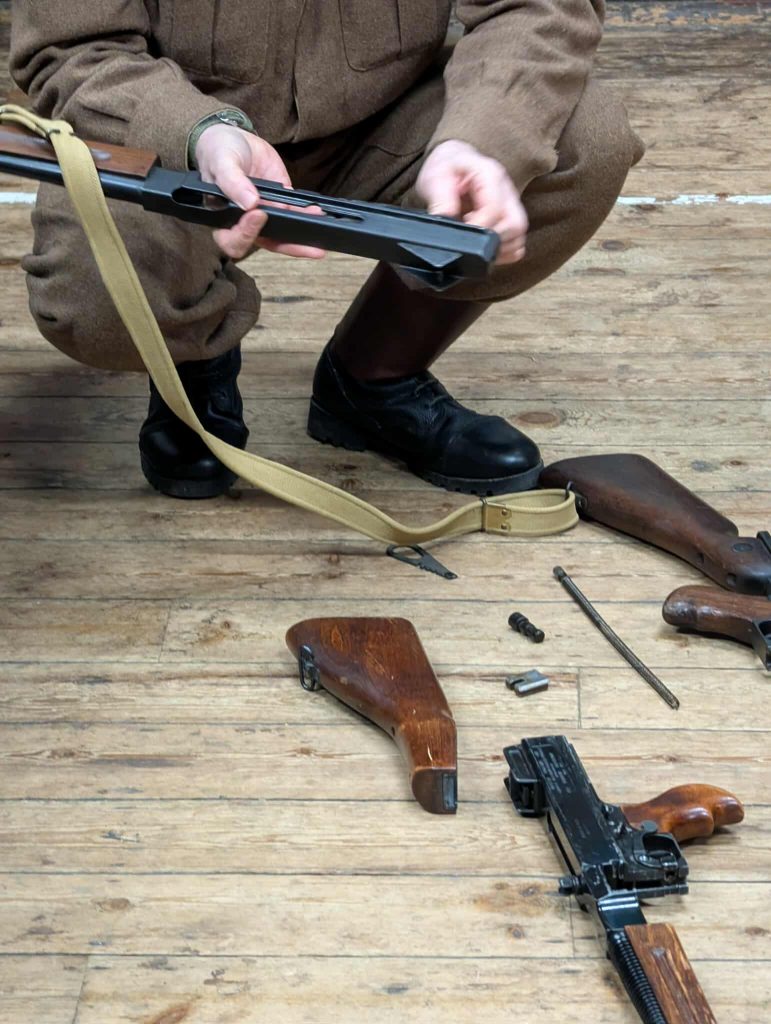
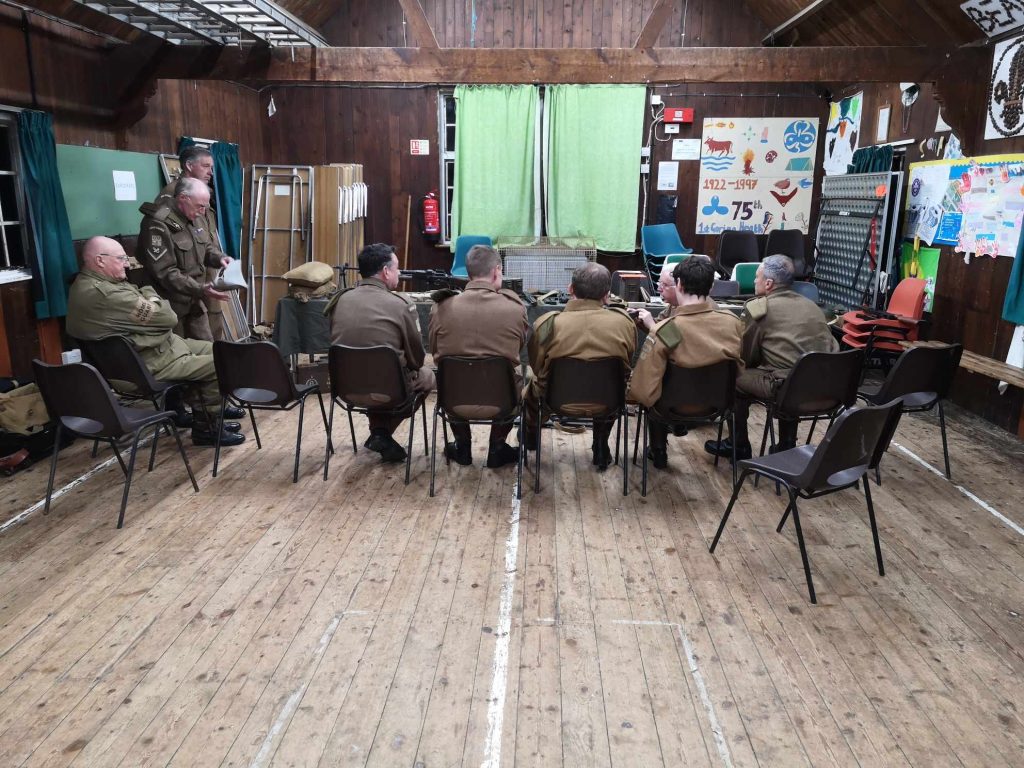
The highlight for many was the opportunity to get hands-on with both the B.A.R. and the Thompson. Examining their weight, balance and ergonomics first-hand brings home the realities faced by the men who carried them. It is one thing to read about these weapons, quite another to feel the heft of a B.A.R. on the shoulder or the compact Thompson in the hands.
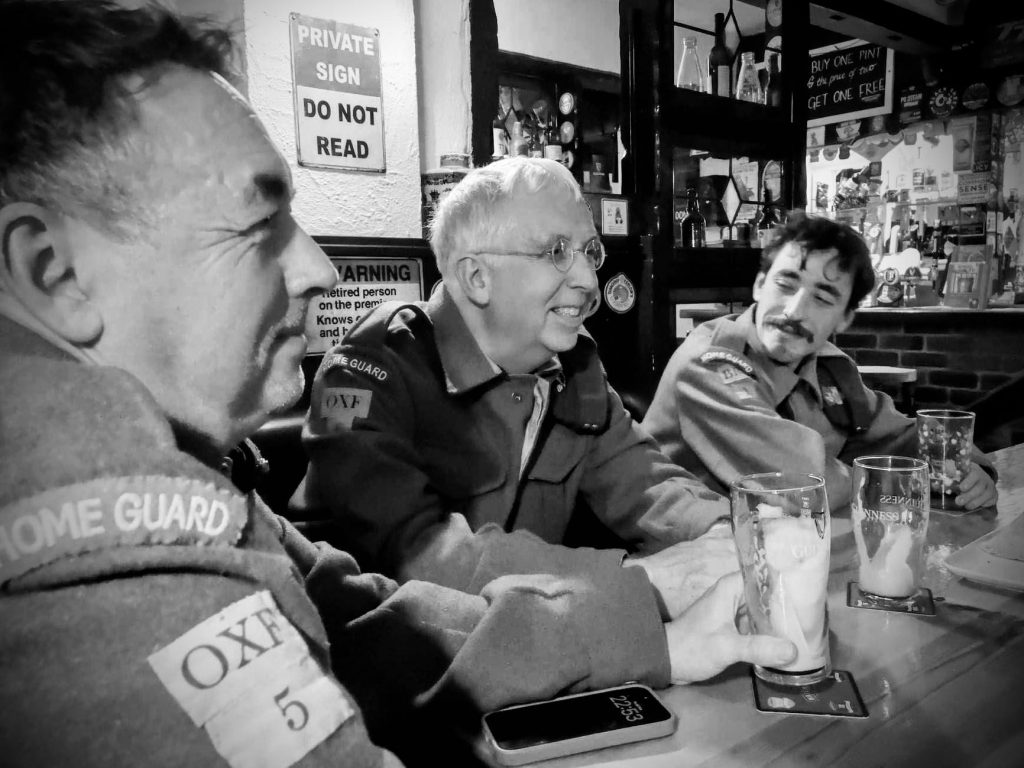
Another solid evening of training, blending drill, leadership development and detailed weapon knowledge, rounded off, as usual, with a well-earned visit to the pub to wind down after coming off duty.
If you are interested in Second World War living history, want to learn new skills, and fancy being part of a motivated and growing platoon, why not join us? Get in touch and come along to a training night. There is always room in the ranks.
No responses yet