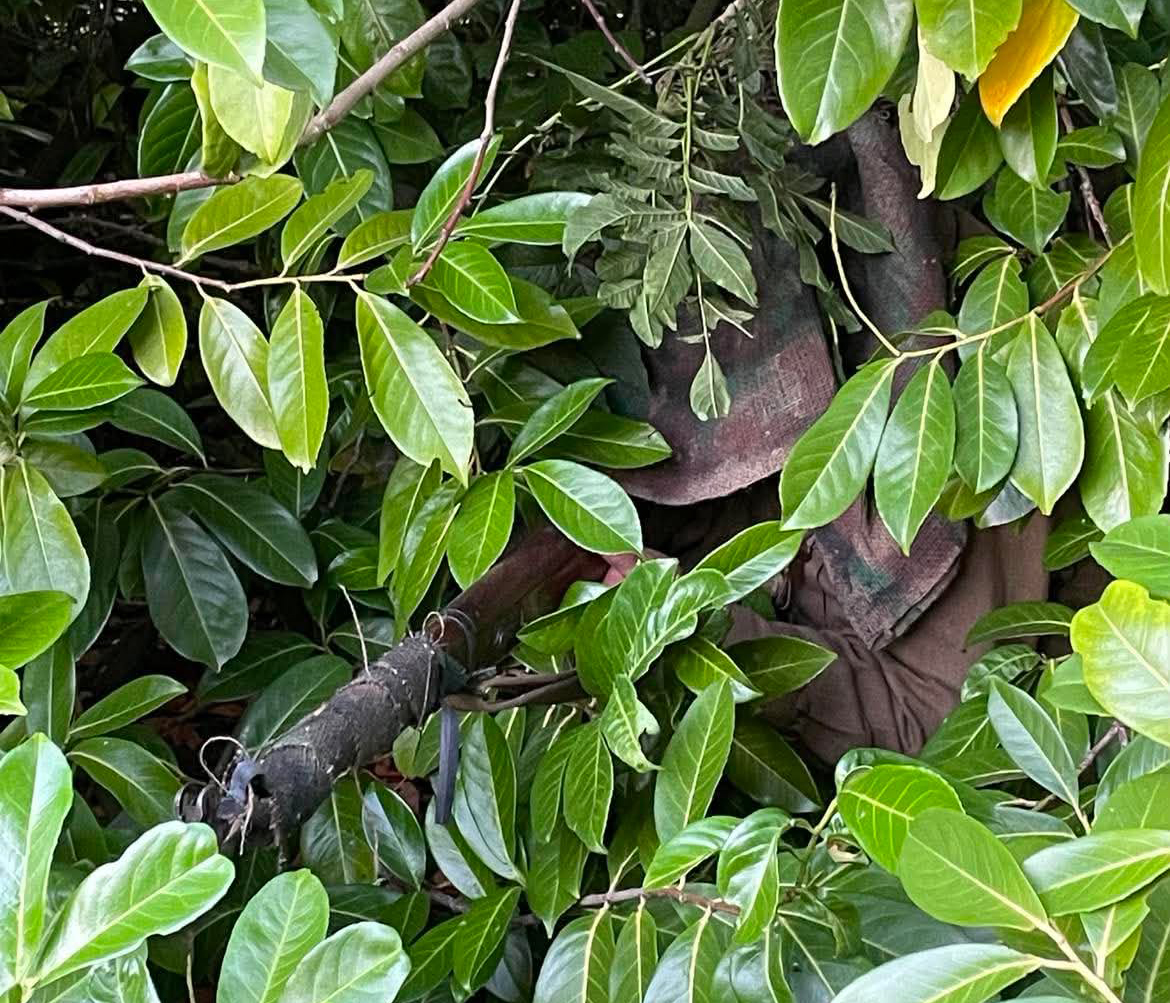
There are few better places to train than Howbery Park. Back in March, it was the setting for our annual Tommy Sleep Out, where members endured a cold night under canvas in aid of charity. Thankfully, for our Home Guard camouflage training evening, the weather could not have been more different, with warm sunshine providing perfect conditions to explore one of the Home Guard’s most important fieldcraft skills – personal camouflage and concealment.
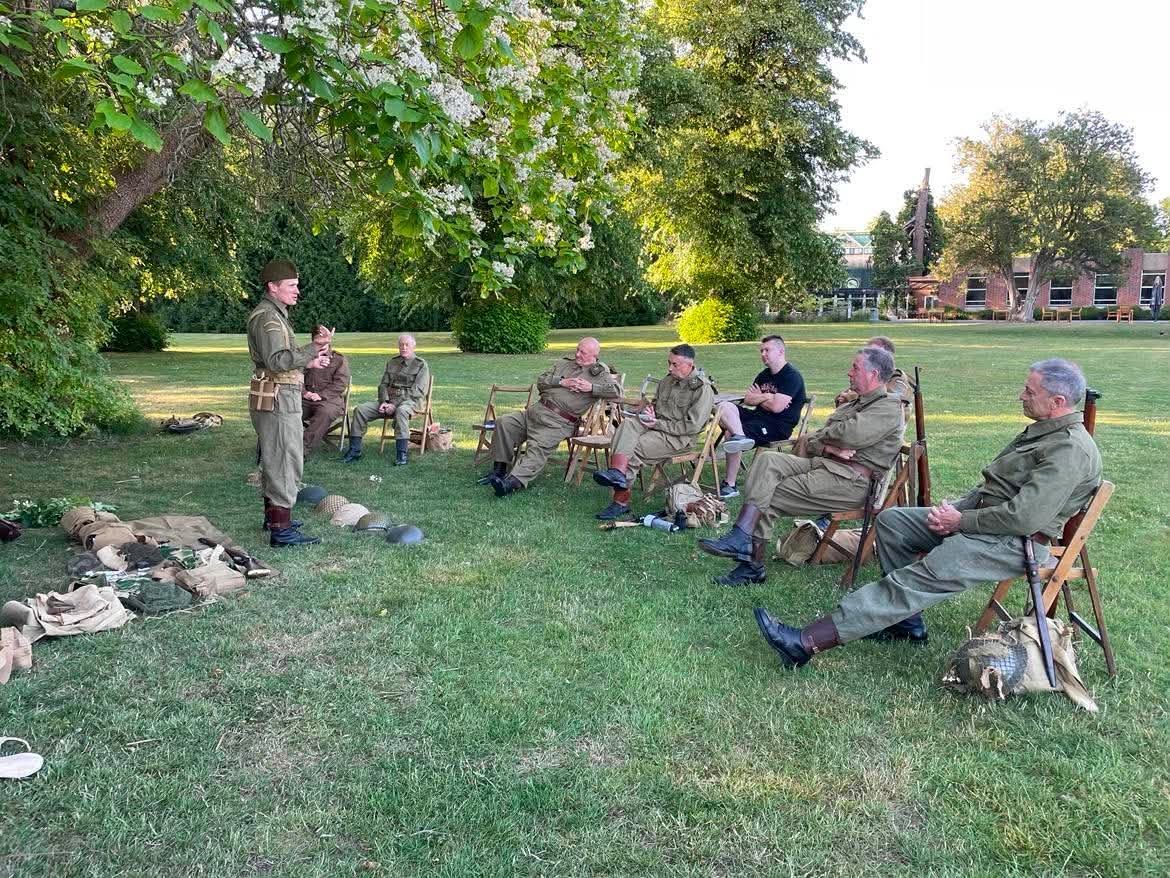
The evening was delivered by Ptes Smith and Gourley. Drawing extensively on original wartime Home Guard manuals, Pte Smith led the classroom element, explaining the principles behind effective camouflage and why it was considered so vital to Britain’s wartime defenders. Meanwhile, Pte Gourley brought the subject to life by demonstrating the various techniques, drawing on his own current military experience to show how many of the underlying principles remain just as relevant today.
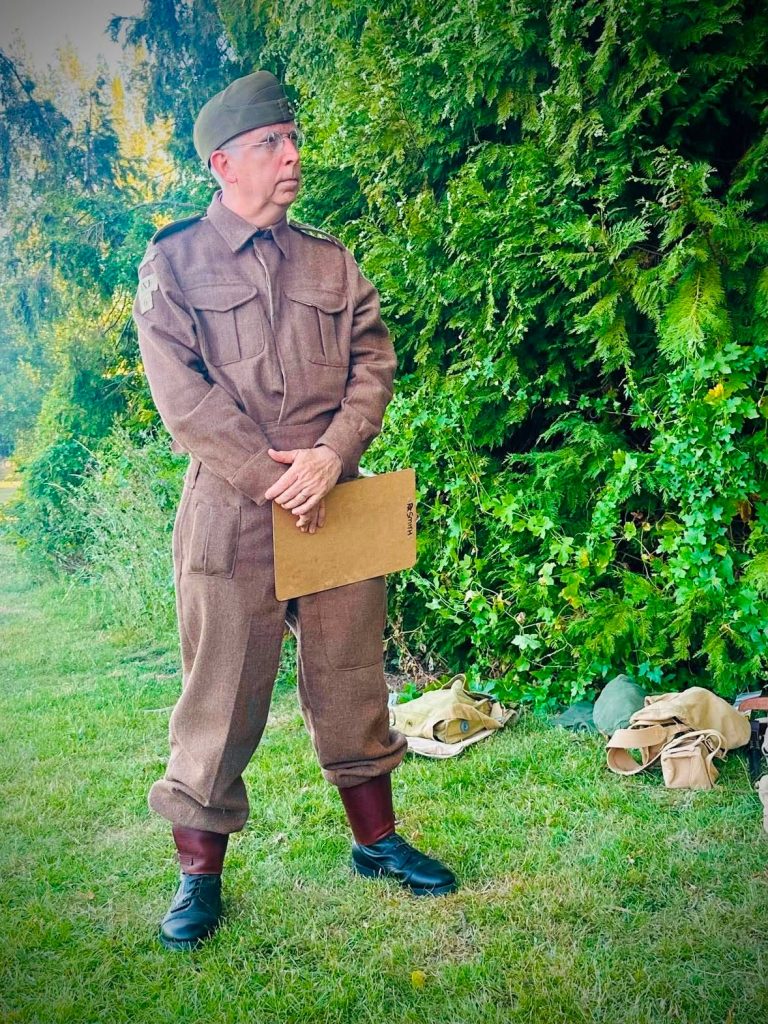
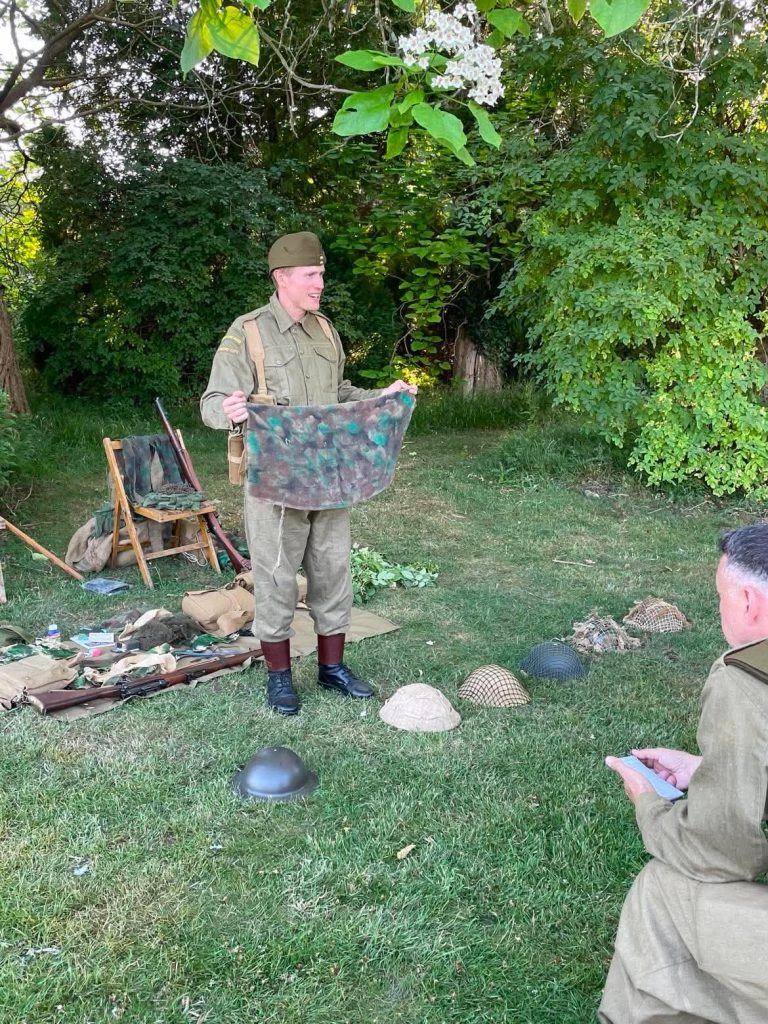
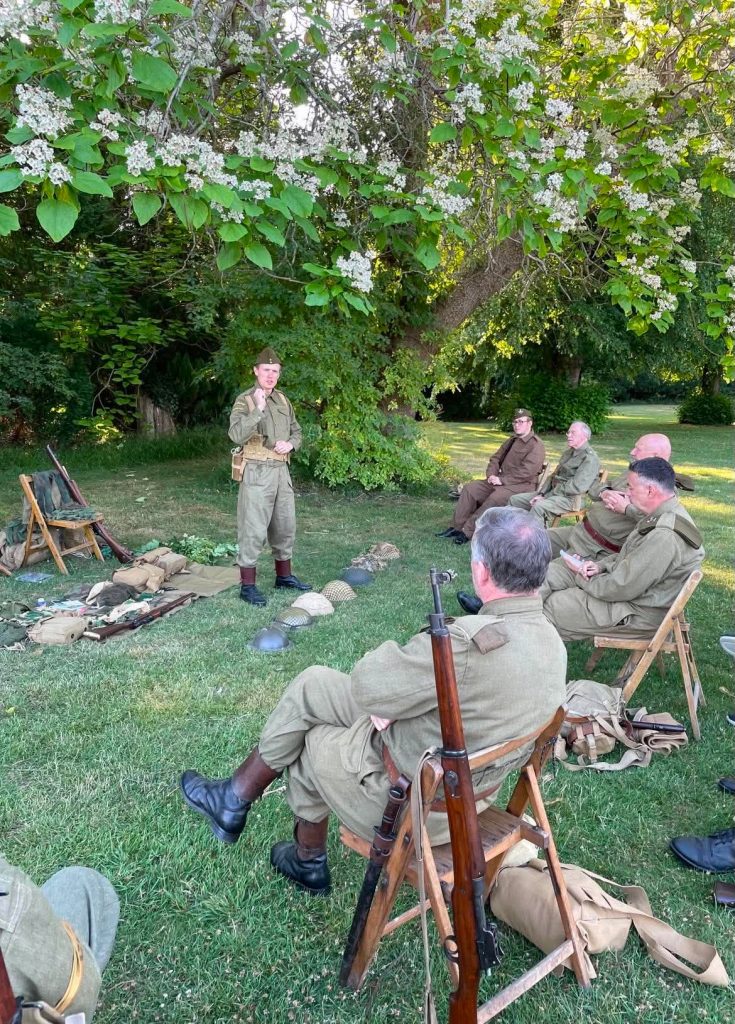
Members learned that successful camouflage is about far more than simply smearing paint across your face. Colour, texture, shape, shine, shadow, movement and even noise all play a part in avoiding detection. The wartime manuals repeatedly stressed that surprise was the first principle of attack, and that surviving long enough to launch a counter-attack depended upon remaining unseen.
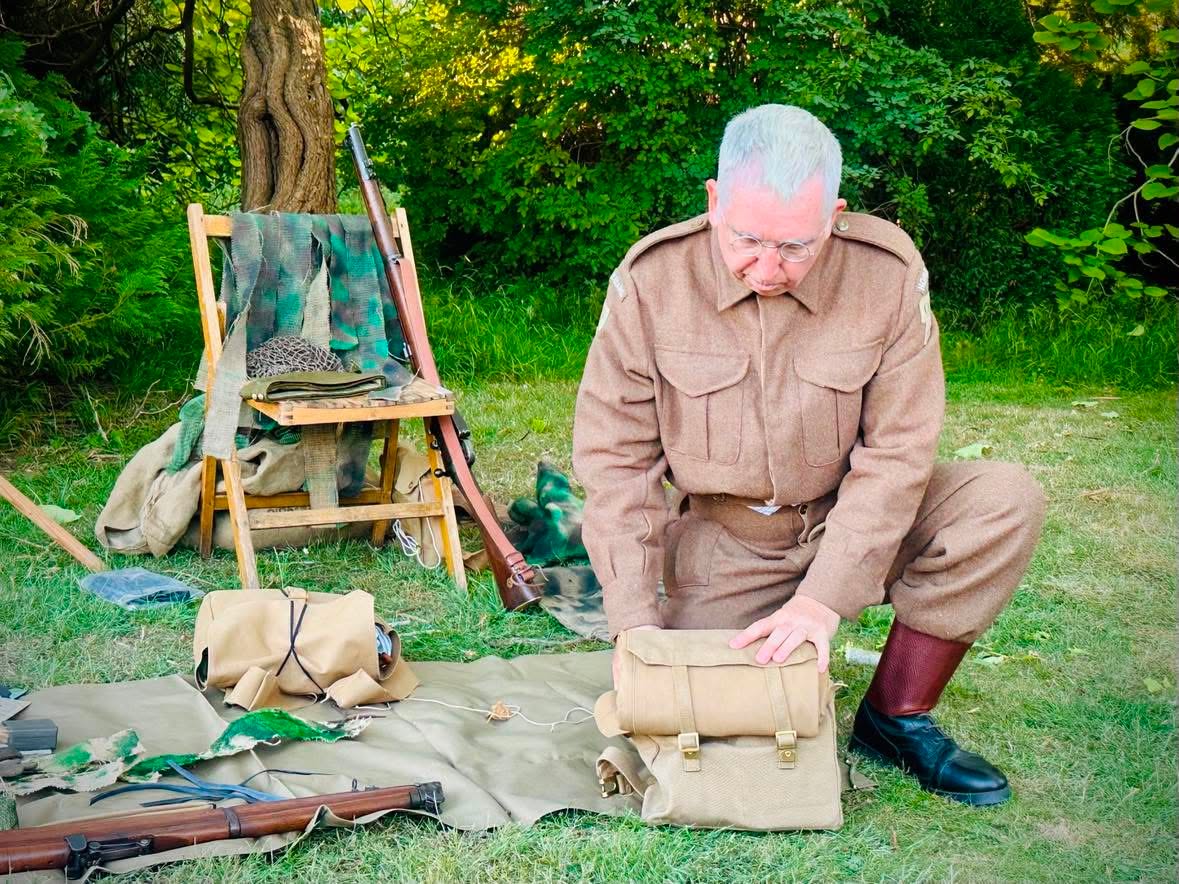
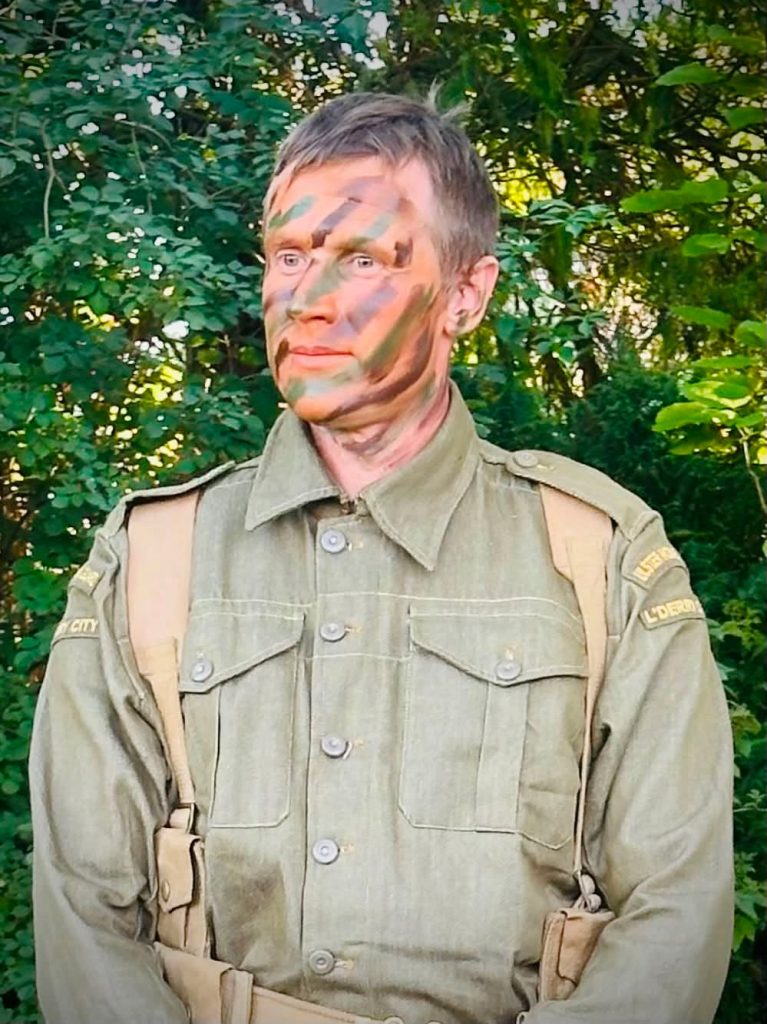
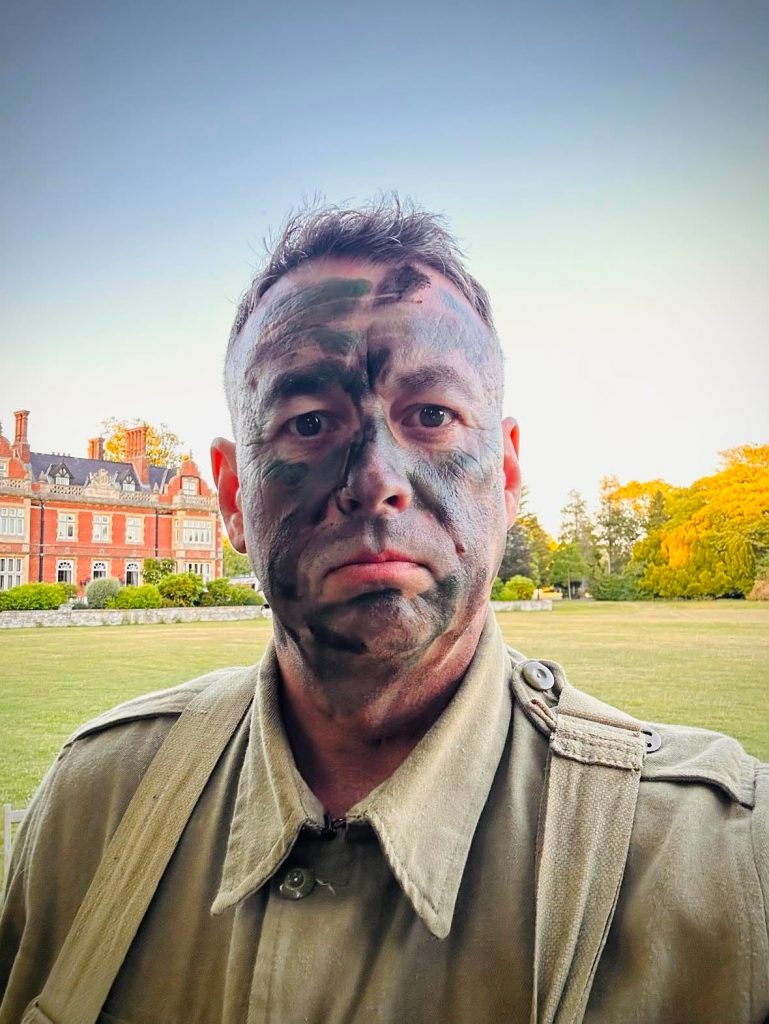
The practical demonstrations covered everything from disguising the distinctive outline of the steel helmet to breaking up the shape of rifles, respirator cases and other equipment. We examined different helmet coverings, discussed the best ways of using local vegetation and looked at various methods of face camouflage. While today’s camouflage creams are considerably more pleasant to use, it was entertaining to discover that wartime manuals also suggested burnt cork, charcoal, mud and even cow dung as perfectly acceptable alternatives should circumstances demand!
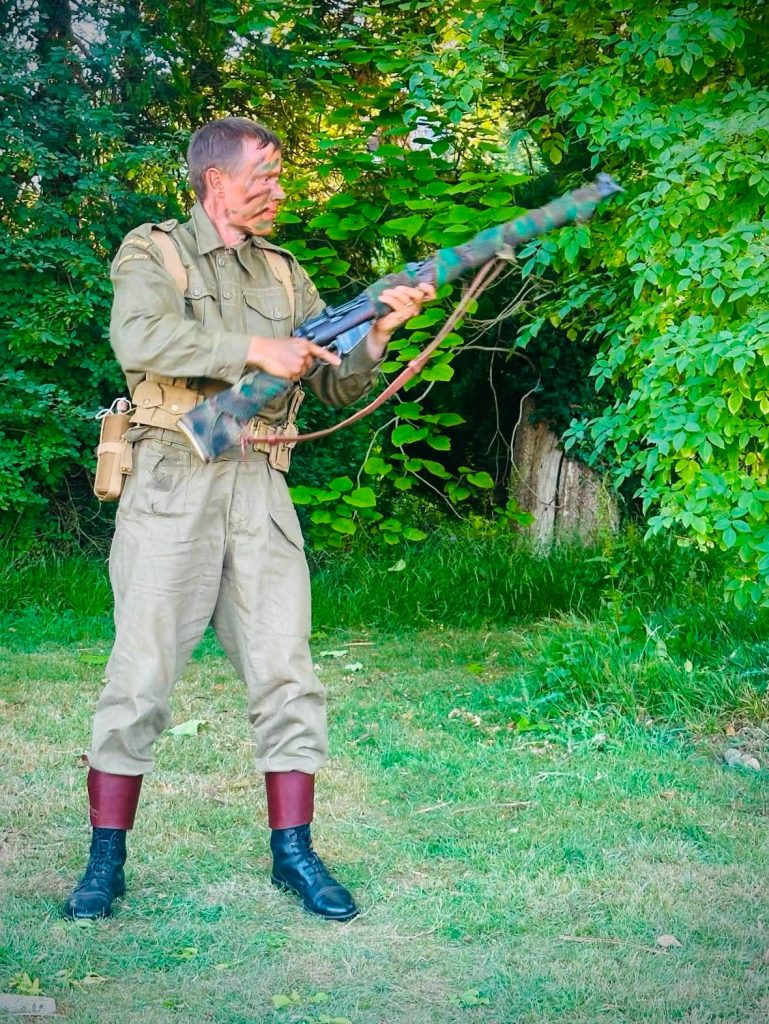
Another excellent demonstration compared two Bren gun positions. The first was left completely exposed, making it remarkably easy to spot even at a distance. The second used a faithful recreation of a wartime camouflage screen, handmade by Pte Smith using wire mesh mounted on stakes and garnished with scrim and local vegetation, following the guidance set out in the original Home Guard training manuals.
The difference was striking. Rather than attempting to hide the weapon completely, the screen disrupted its distinctive outline and blended it into the surrounding vegetation, making it significantly harder to identify. It was a simple but highly effective demonstration of how a little preparation could dramatically improve the survivability of a Bren gun team in a defensive position, and why such portable screens formed an important part of wartime camouflage doctrine.
With the theory complete, it was time to put it into practice.
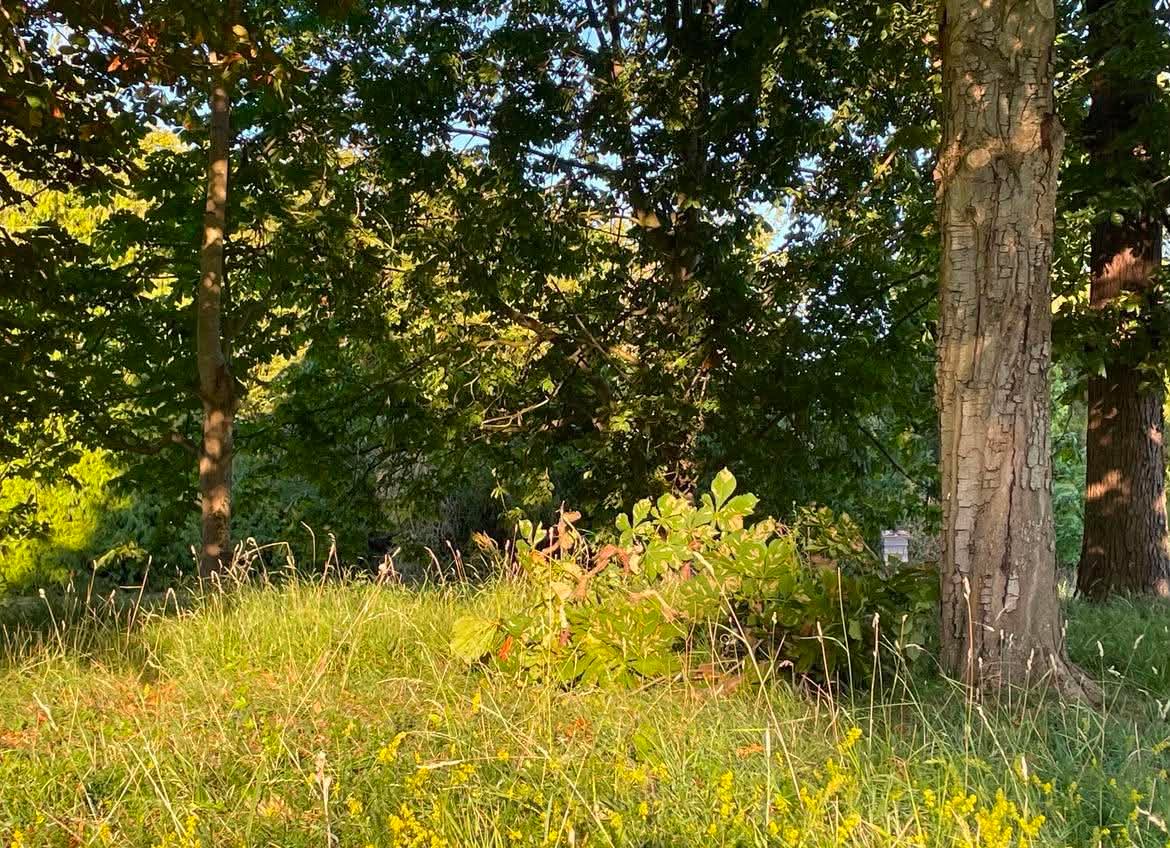
Our first concealment exercise allowed members to choose from a varied landscape of trees, shrubs and long grass, selecting what they believed to be the best hiding place before attempting to remain undetected. Some chose their positions wisely, while others quickly discovered that what appears to be excellent cover from your own perspective can look rather different to someone searching from a distance.
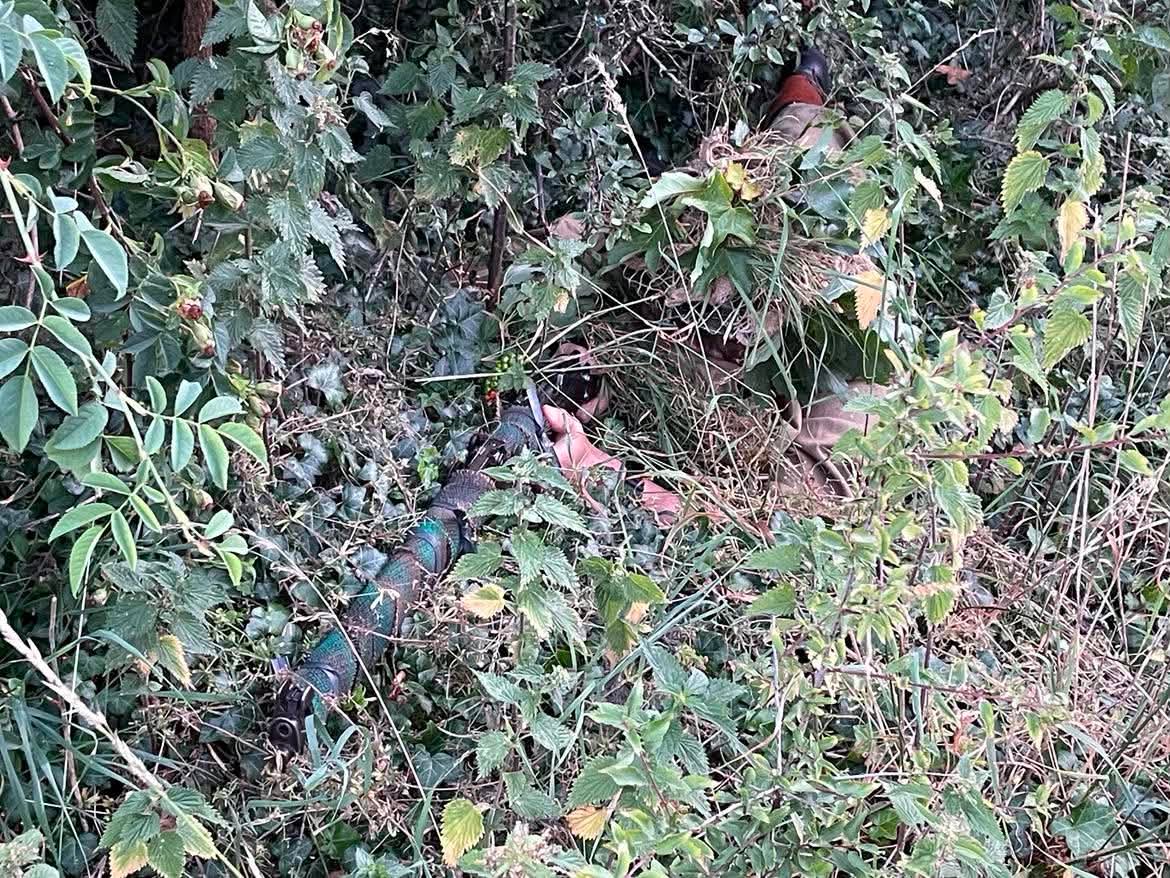
The second exercise was considerably more challenging. This time everyone was restricted to a much smaller area consisting mainly of long grass with only a handful of widely spaced trees. With natural cover at a premium, members had to rely far more heavily on the camouflage techniques they had just learned, carefully blending themselves into the available terrain rather than simply hiding behind large objects. It proved to be a far sterner test, and demonstrated just how much difference careful preparation and attention to detail can make.
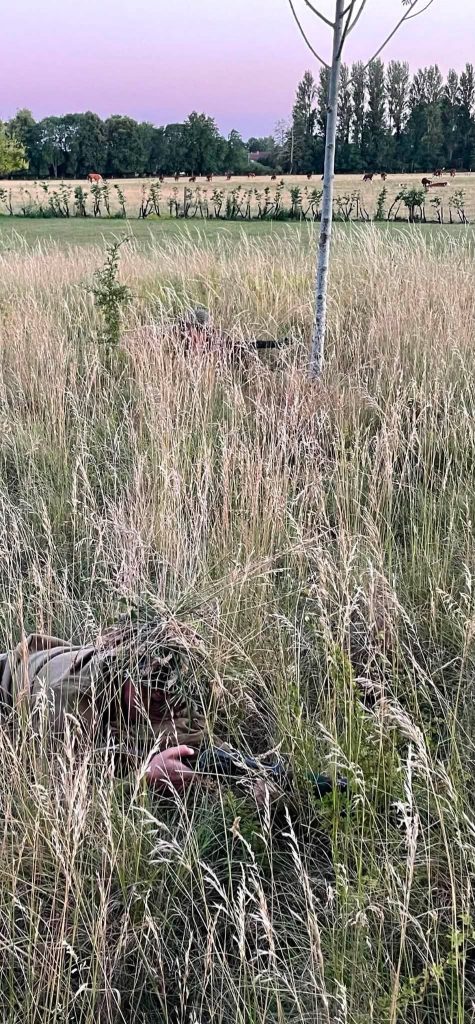
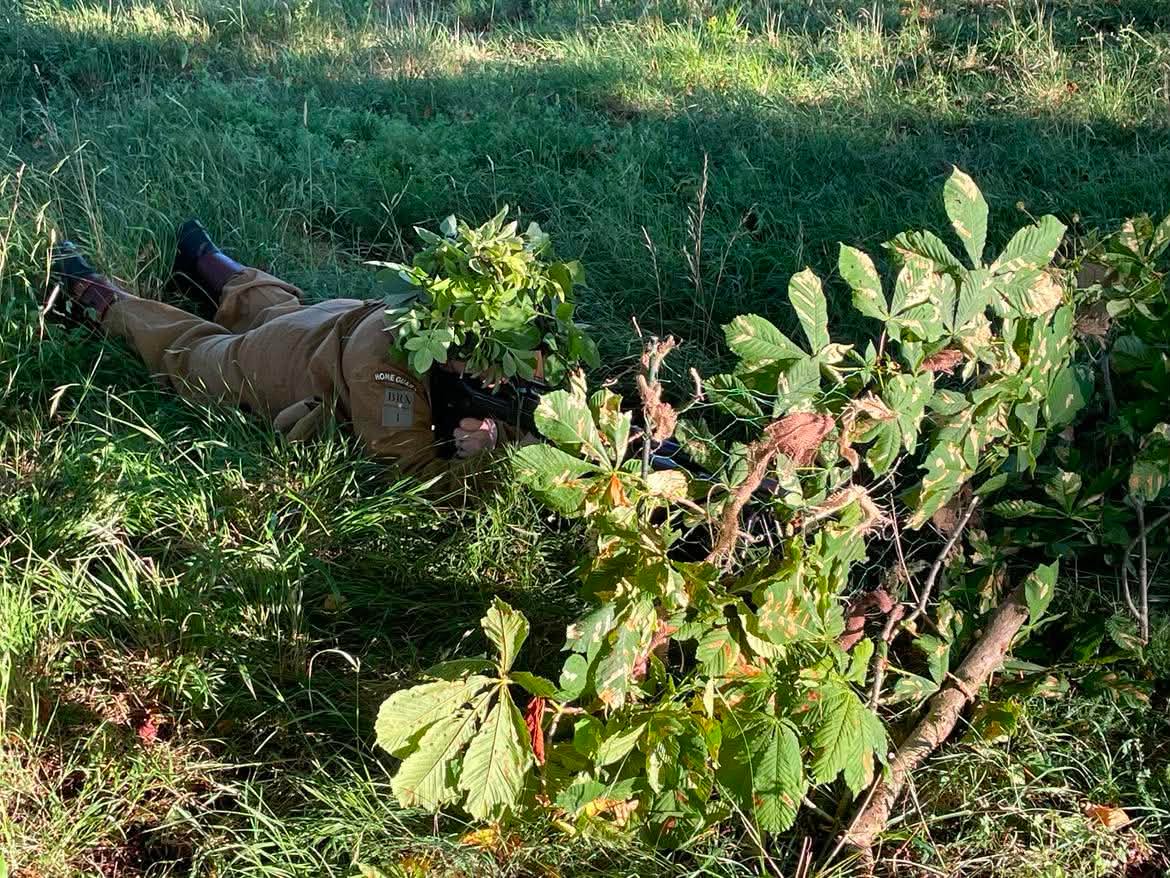
One of the highlights of the evening was seeing just how effective even simple, improvised camouflage can be when applied correctly. Small adjustments to a helmet, a little disruption of the outline of a rifle, making use of shadows or simply remaining perfectly still often made the difference between being spotted immediately and remaining hidden for several minutes.
We were also delighted to welcome a new recruit to the platoon for the evening. Judging by his enthusiasm and willingness to throw himself into the exercises, we’re pleased to report that he’ll be returning for future training sessions, answering the call to defend our island in its darkest hour.
Training evenings like this perfectly capture what Redline Home Guard Living History Group is all about. We strive to recreate wartime Home Guard training as authentically as possible, combining careful historical research with practical experience and, above all, enjoying ourselves while learning.
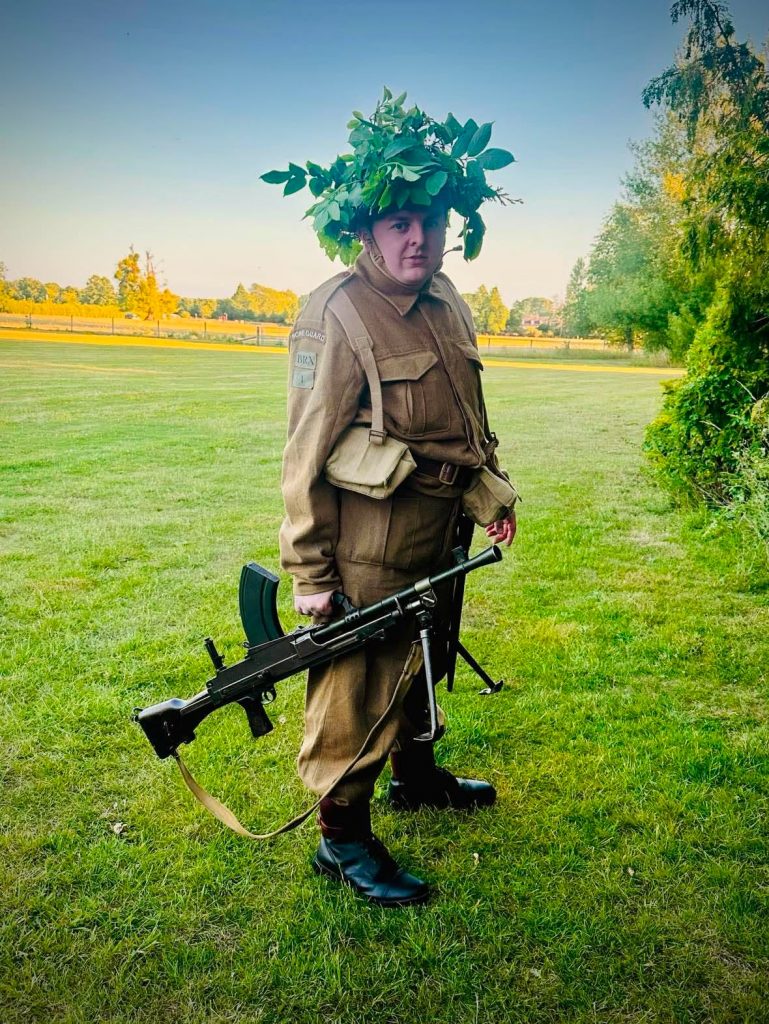
It was an evening of dedication, education and good humour—and one that left us all with a much greater appreciation of just how difficult it is to see a well-camouflaged Home Guardsman… even when you know exactly where to start looking.
No responses yet