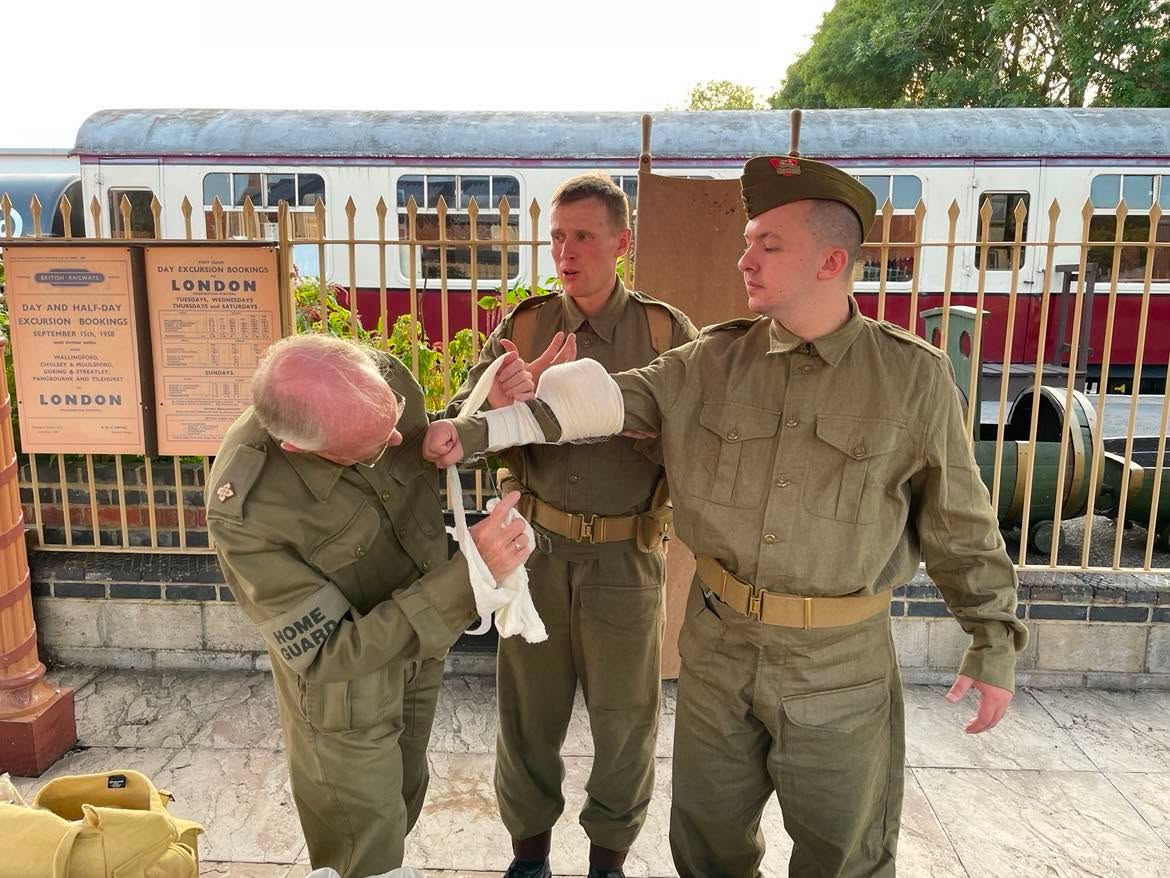
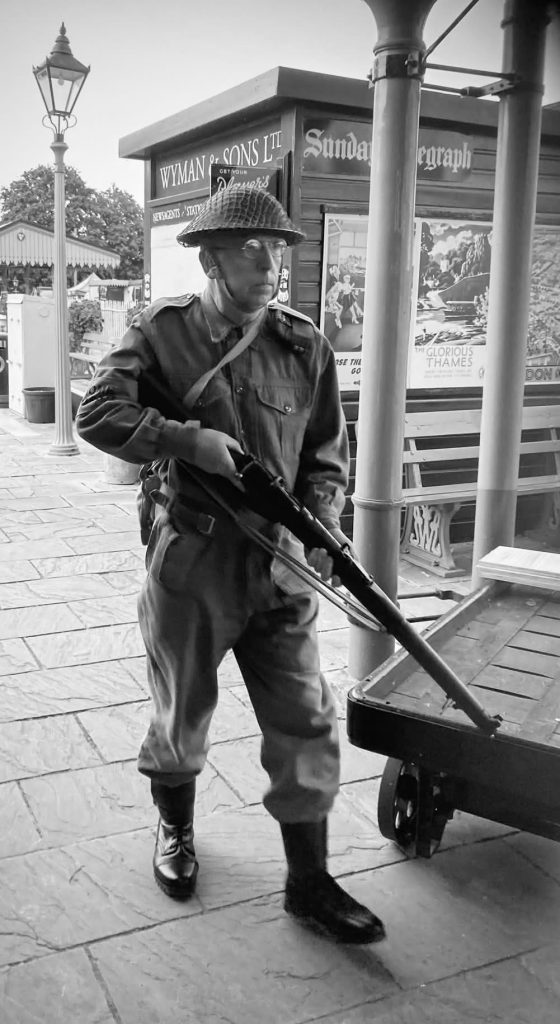
Our combat first aid Muster on 17 July took place amid the atmospheric surroundings of Wallingford station, part of the Cholsey & Wallingford heritage railway.
With Britain facing the threat of invasion in 1940 and 1941, basic first-aid knowledge was as important to the Home Guard as it was to the regular Army. In an emergency, a guardsman might have been called upon to help a wounded comrade – and quite possibly a friend – until proper medical assistance became available.
A platoon would ideally have had its own trained first aider, although their equipment may have amounted to little more than a satchel of medical supplies. Their task was to stabilise casualties and keep them alive until evacuation could be arranged. First aid was therefore a core part of the wartime Home Guard training programme, often taught by St John Ambulance.
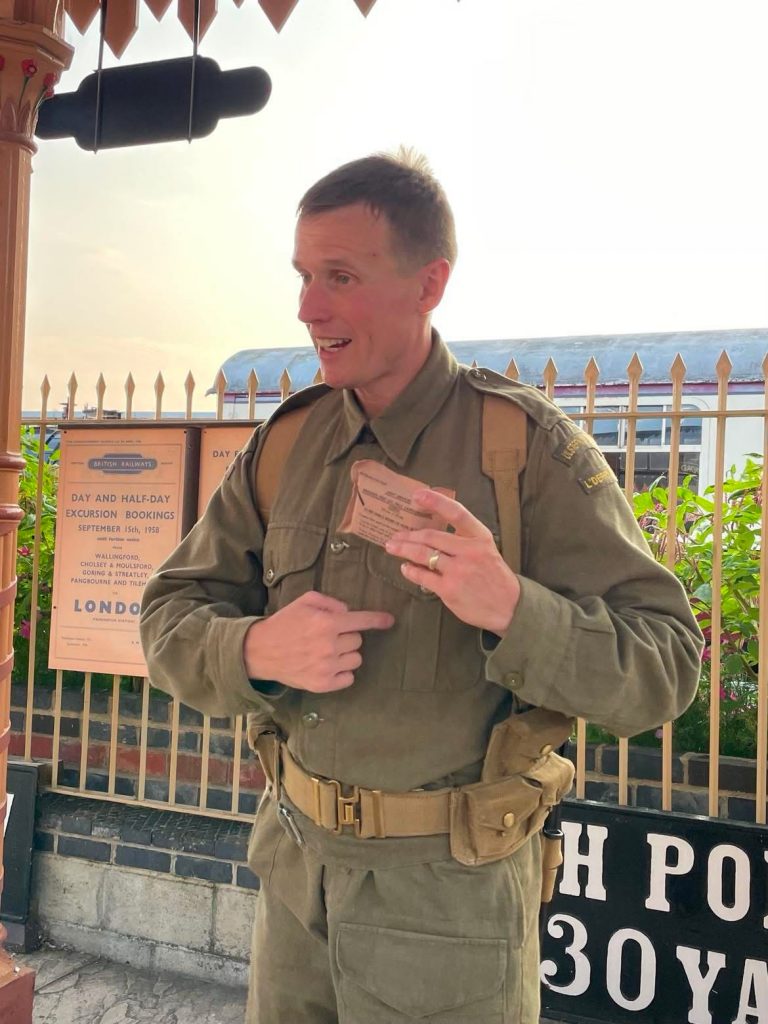
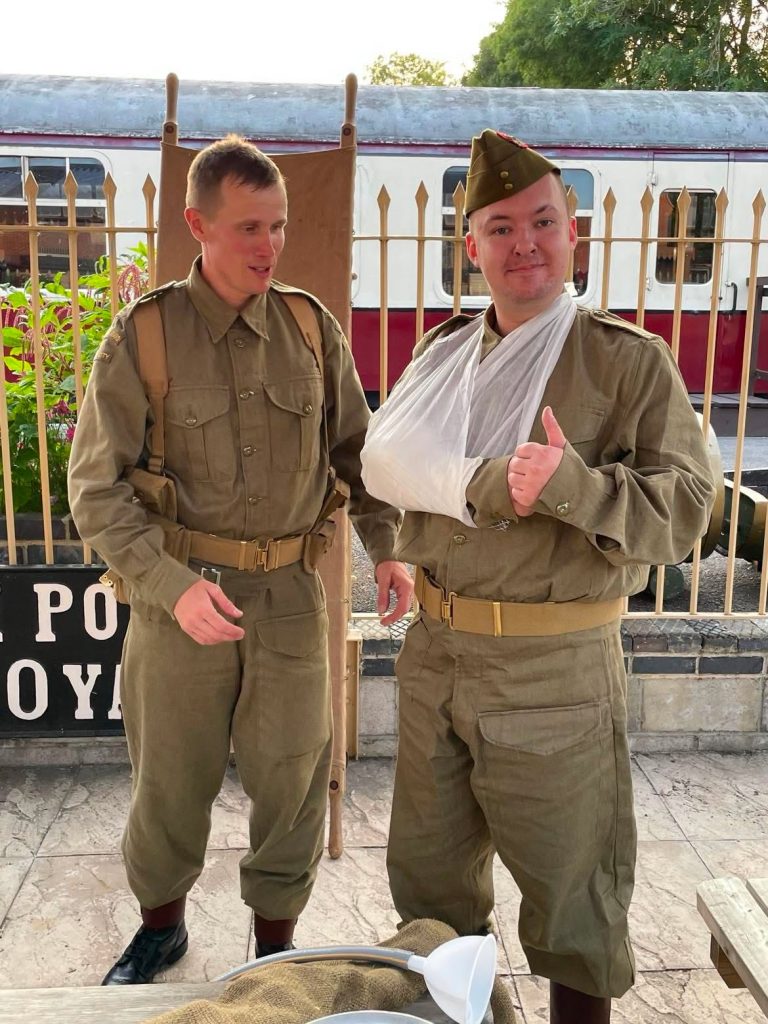
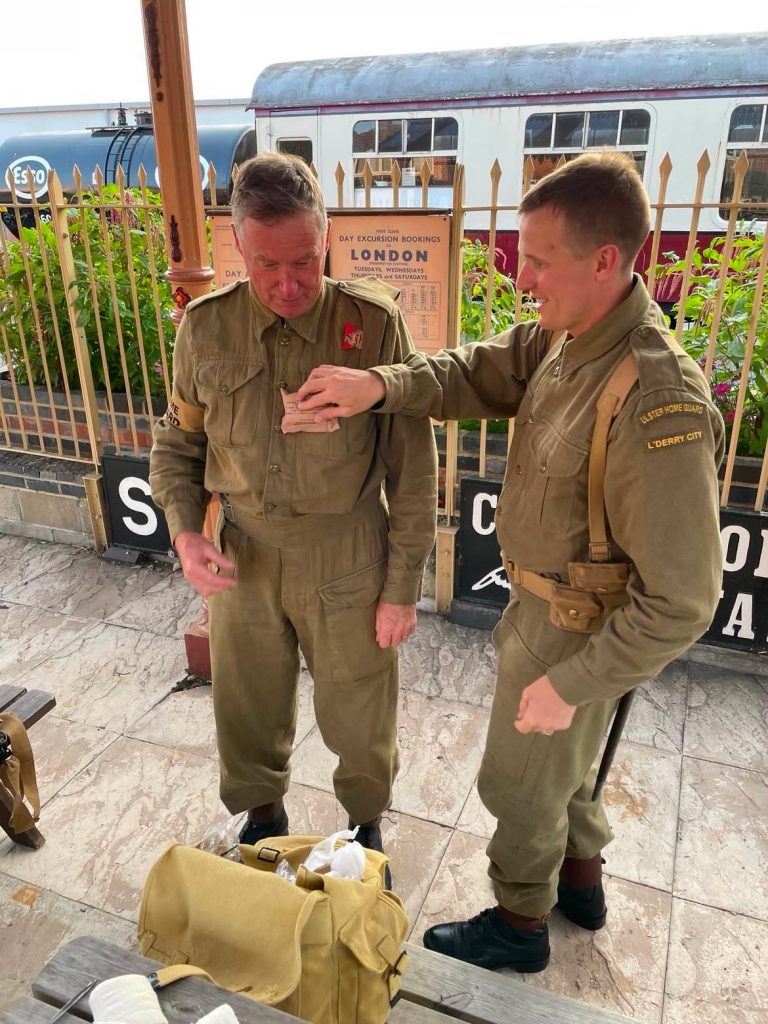
For our session, Pte Gourley drew upon his Armed Forces training role to give the group an informative introduction to combat first aid. He demonstrated the issued First Field Dressing carried by each of us, along with the larger Shell Dressing and a selection of bandages. Wartime examples were compared with their modern equivalents, revealing that some items – and many of the underlying principles – have changed surprisingly little.
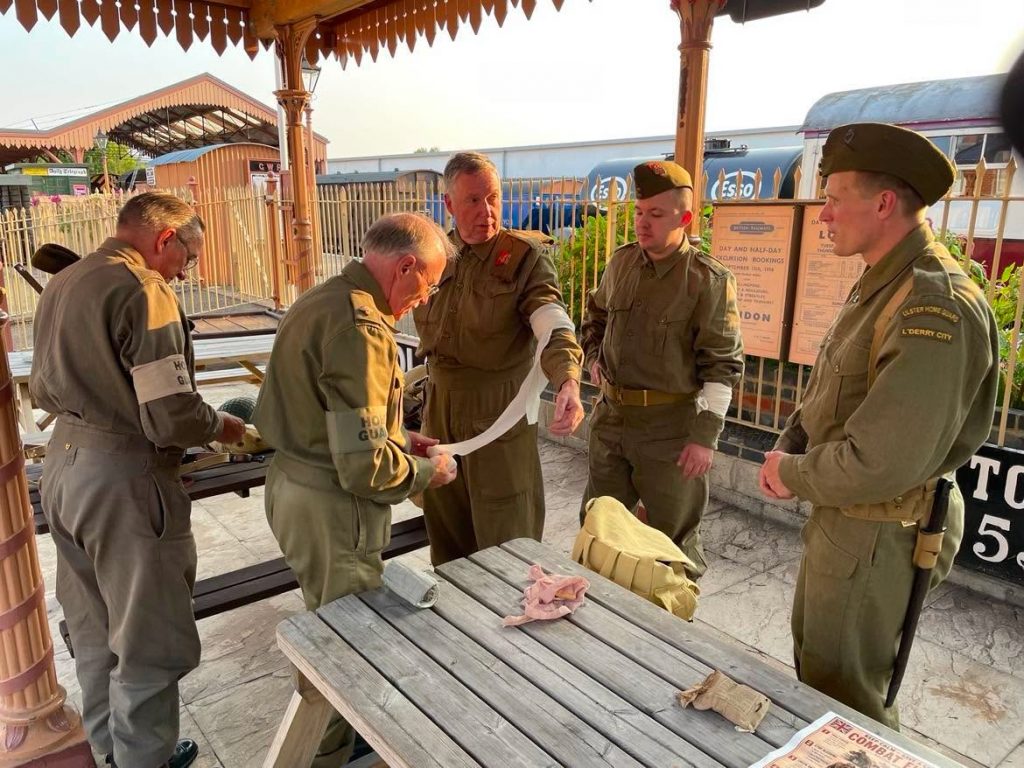
We were shown how to assess and treat a range of wounds and injuries. This included checking a casualty’s breathing and airway, examining the whole body for less obvious injuries, and responding to fractures, limb loss, puncture wounds, impaled objects, concussion and shock.
Different bandaging techniques were demonstrated on several willing volunteers, most notably our new recruit, Pte Cockerell.
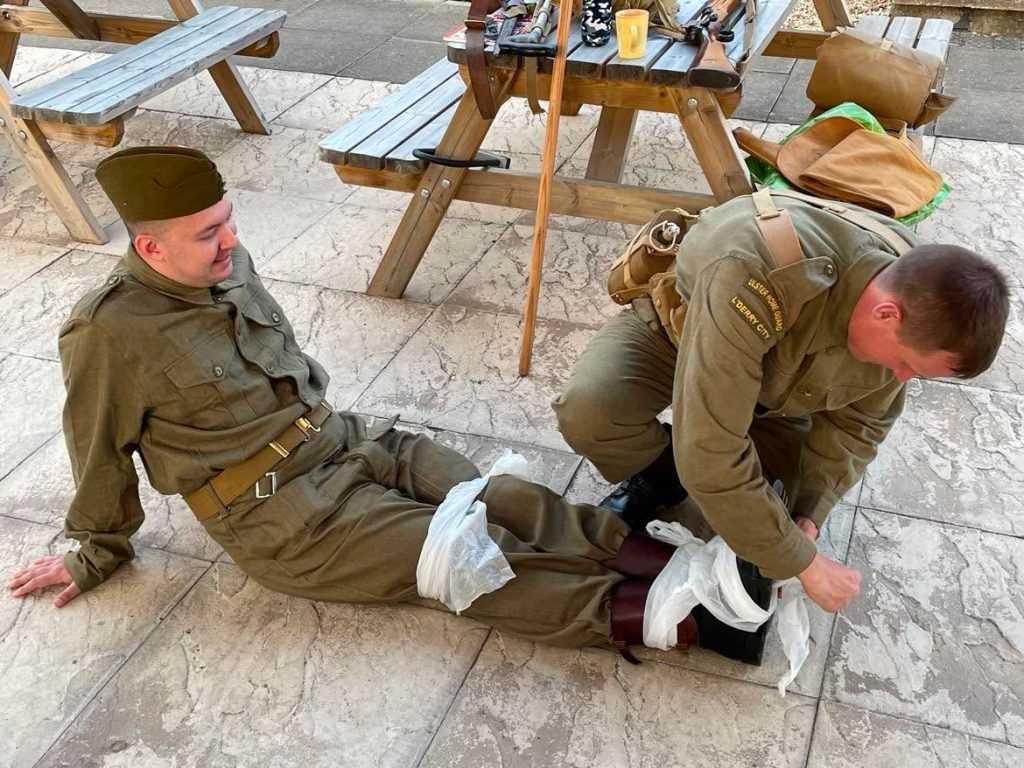
One particularly memorable exercise involved using a spoon as part of an improvised tourniquet. Taking turns, members of the group attempted to stem the flow from a water hose representing a severely bleeding limb. The decidedly mixed results caused plenty of amusement, while also underlining the seriousness of the situations a wartime guardsman might have faced.
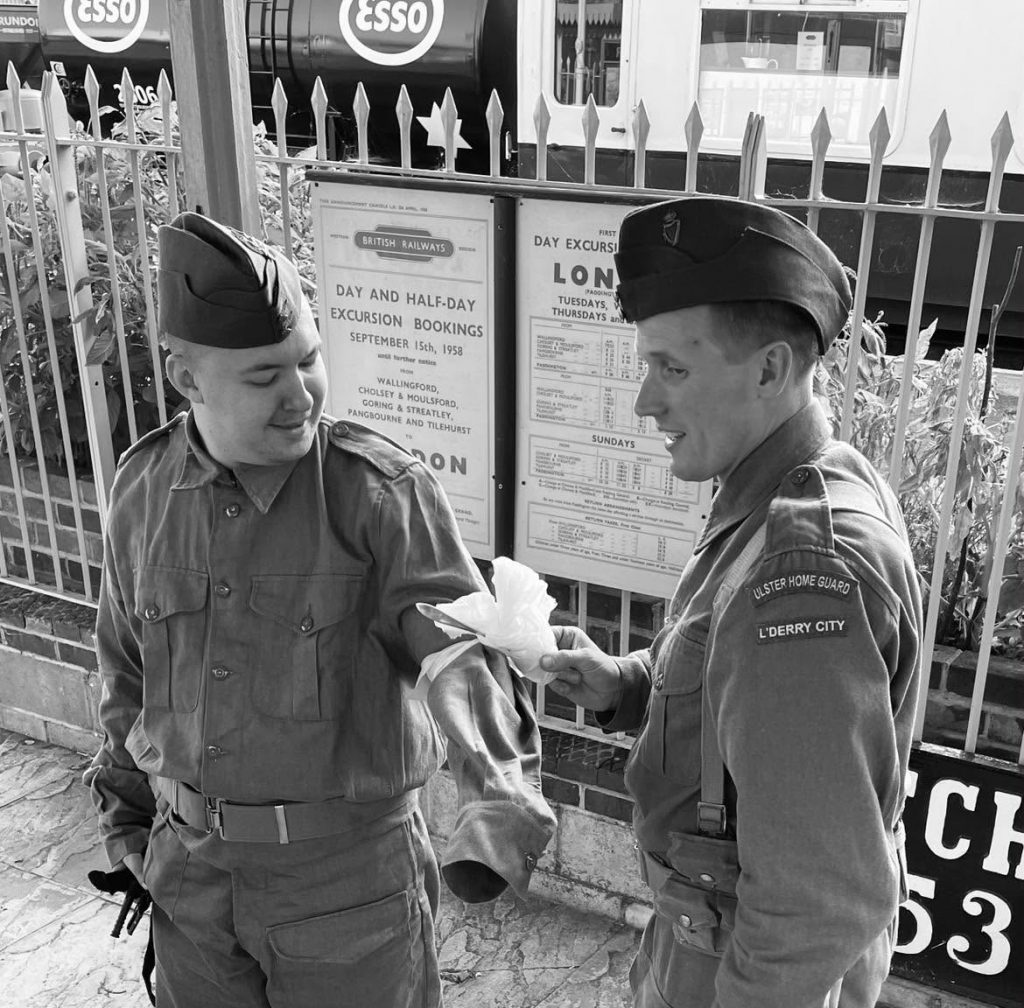
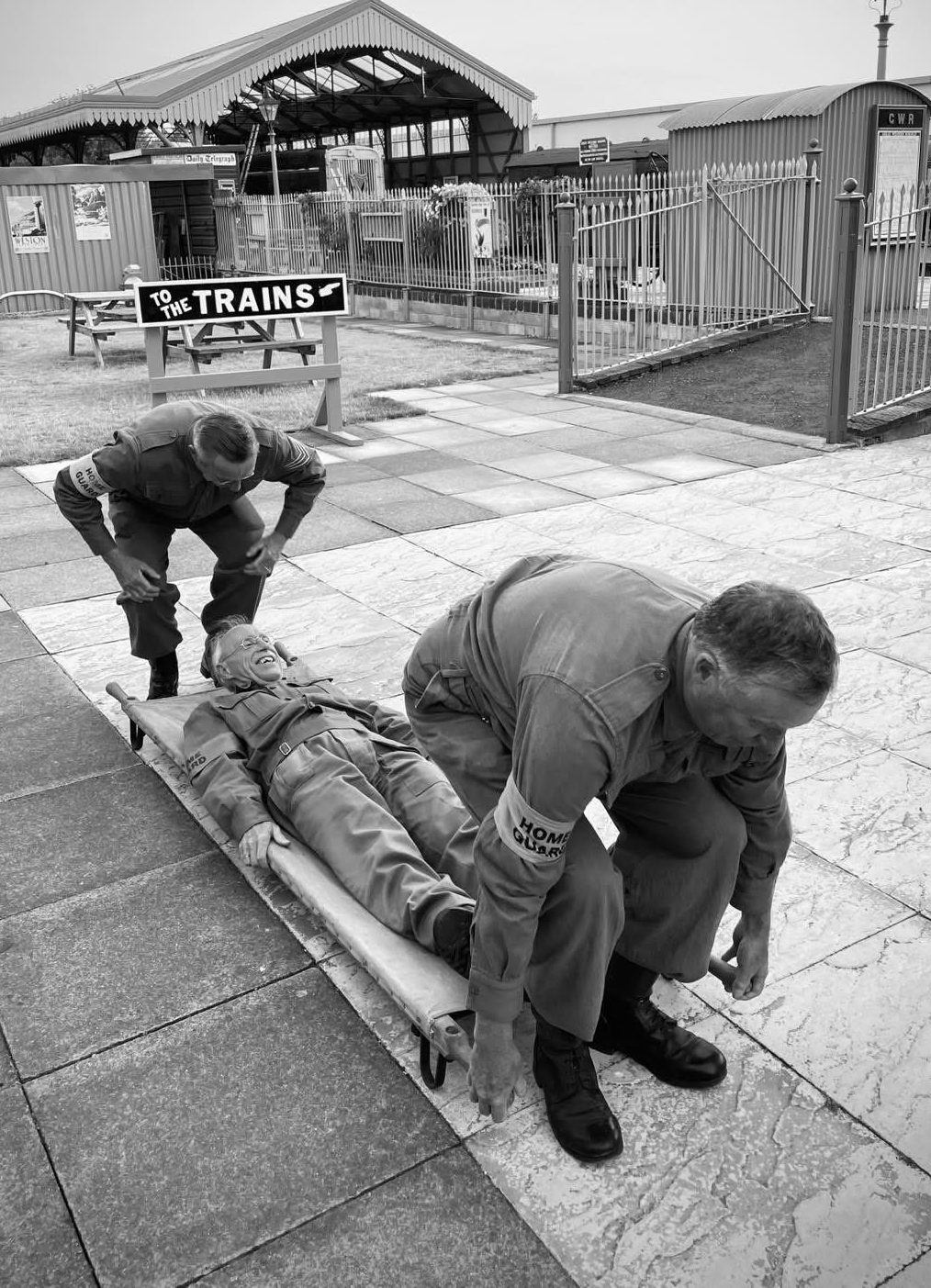
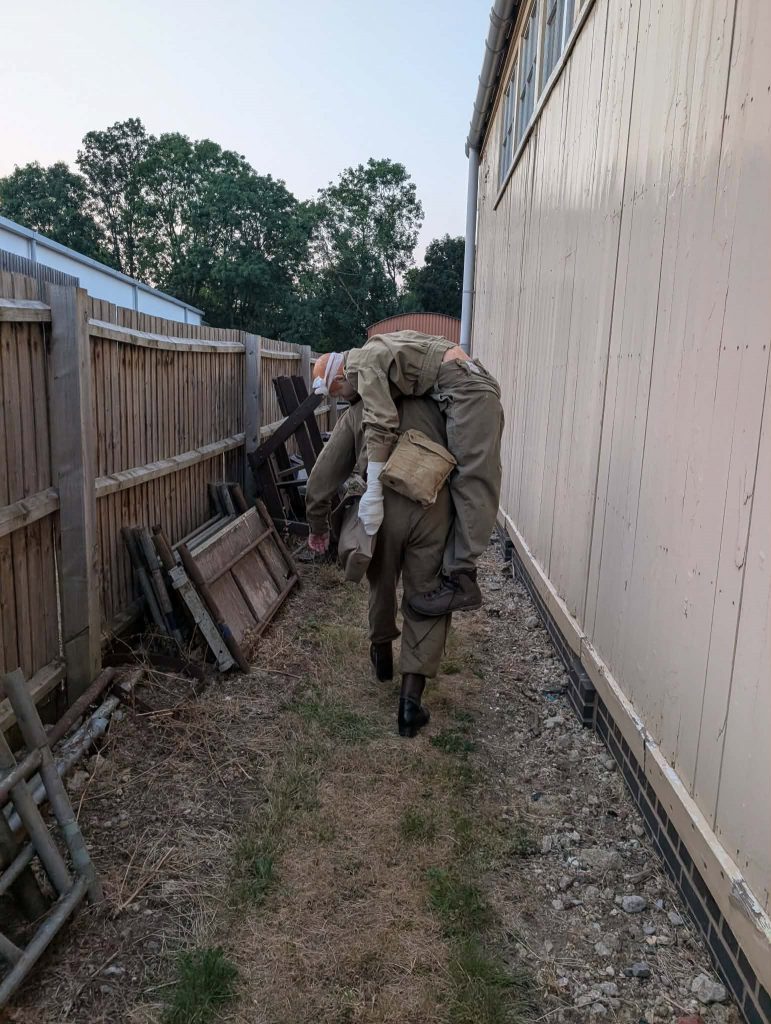
We next practised preparing a casualty for evacuation by stretcher, including the correct lifting and carrying procedures. A number of manual carrying techniques were also rehearsed, producing further moments of humour as we became acquainted with the less elegant realities of casualty handling.
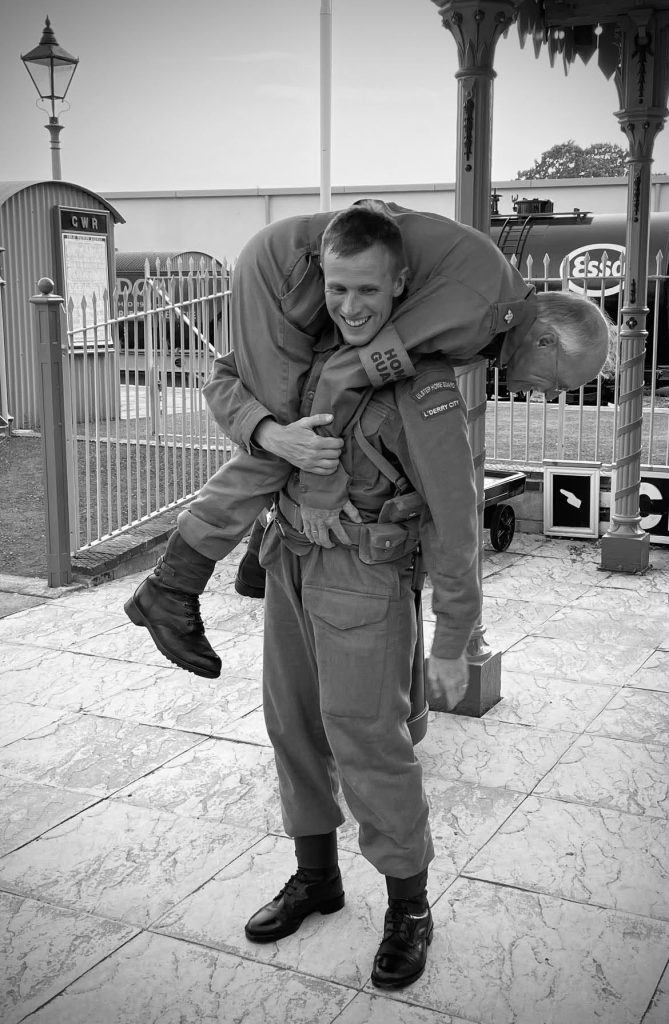
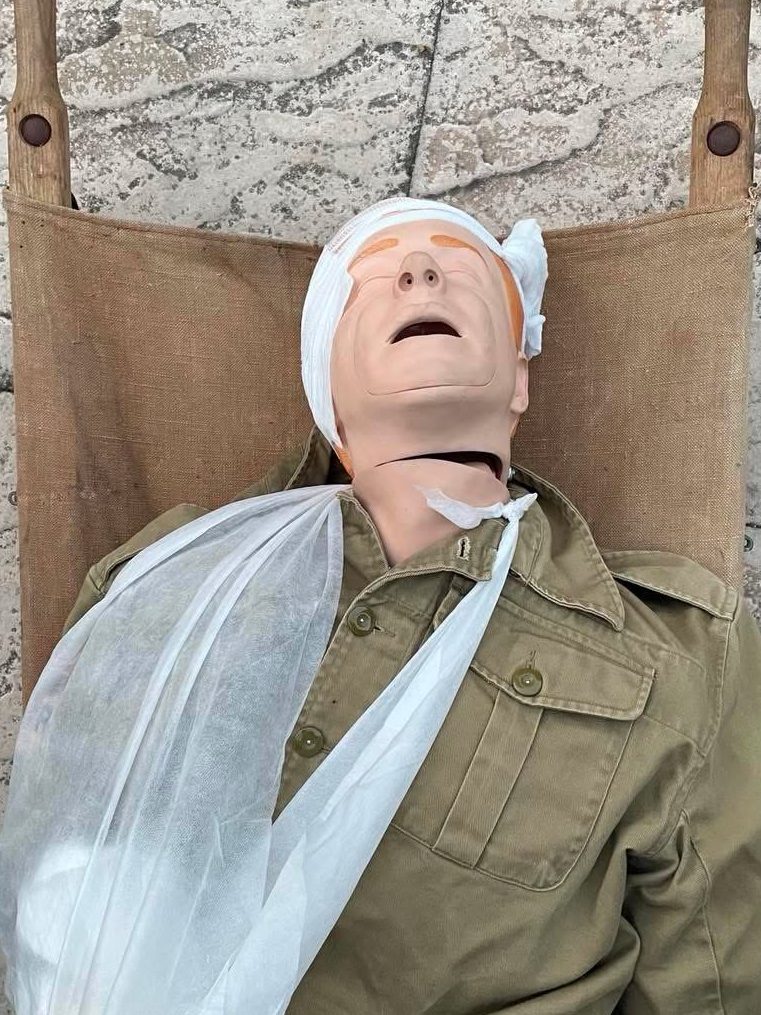
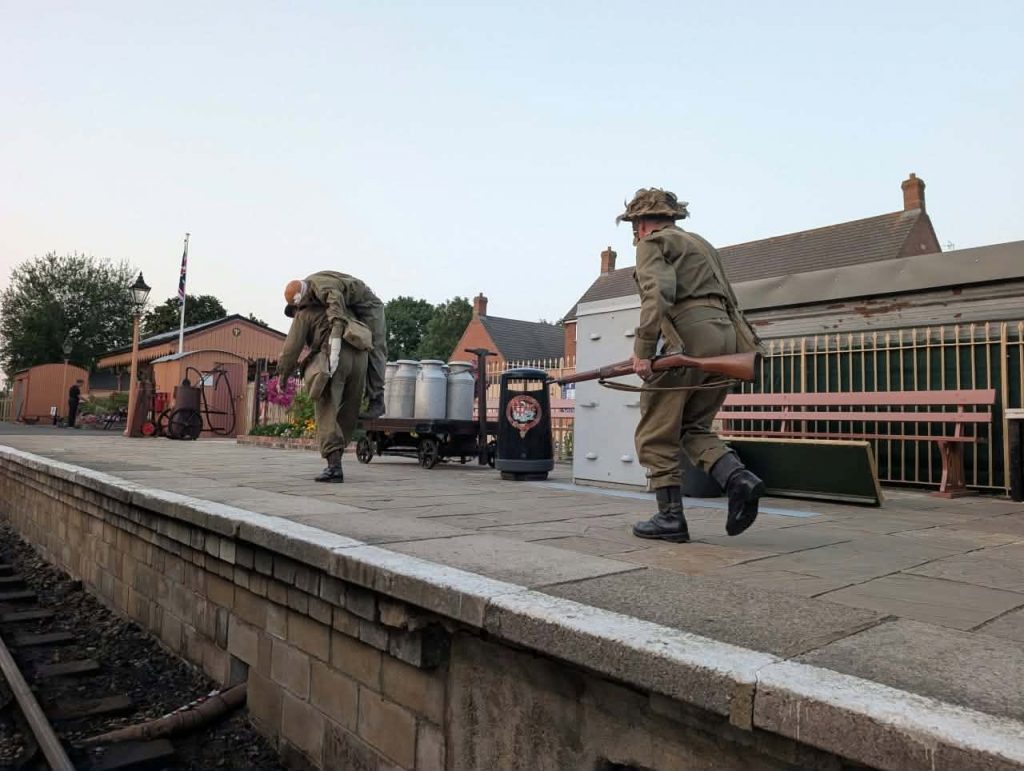
The evening concluded with two post-air-raid scenario exercises staged around the station platform and its surrounding buildings. Realistic training mannequins were used to represent casualties with traumatic injuries.
Under the watchful eye of Pte Gourley, Ptes Cockerell and Smith began by patrolling the platform. After discovering a casualty, they had to put their newly acquired skills into practice: assessing the scene, checking for further casualties or threats, and deciding upon an appropriate response.
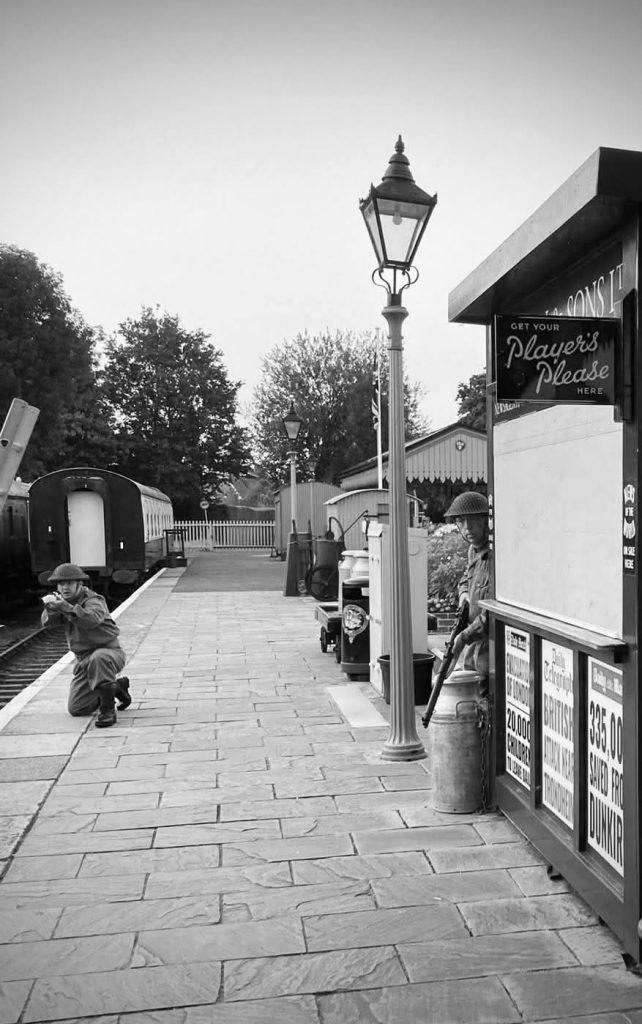
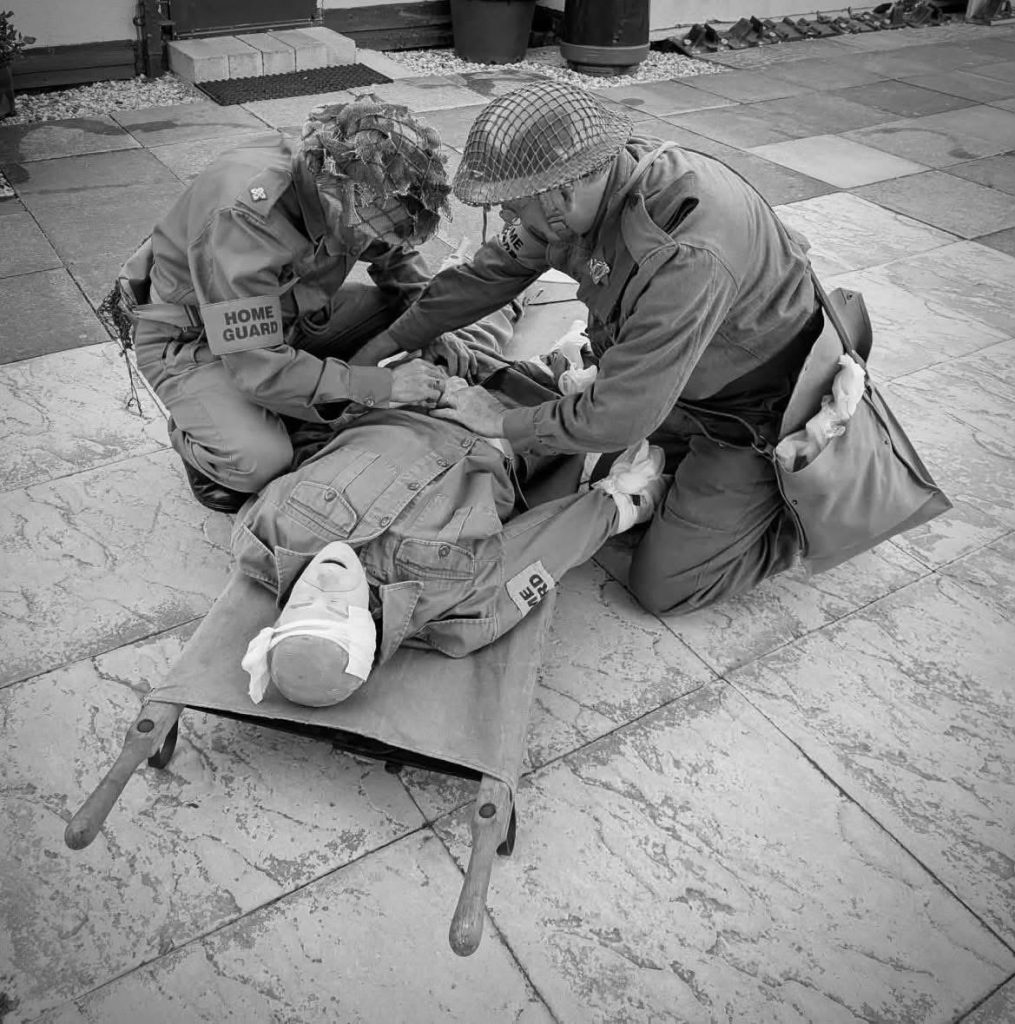
The discovery of an unexploded 25kg bomb nearby meant the casualty had to be evacuated immediately before treatment could begin in a safer location. With a great deal to remember and apply under pressure, the exercise made a convincing case for regular practice.
In the second scenario, 2nd Lt Chambers and Pte Martin worked under the supervision of Sgt Quigley. Their casualty had sustained multiple injuries, requiring a more extensive assessment and treatment plan.
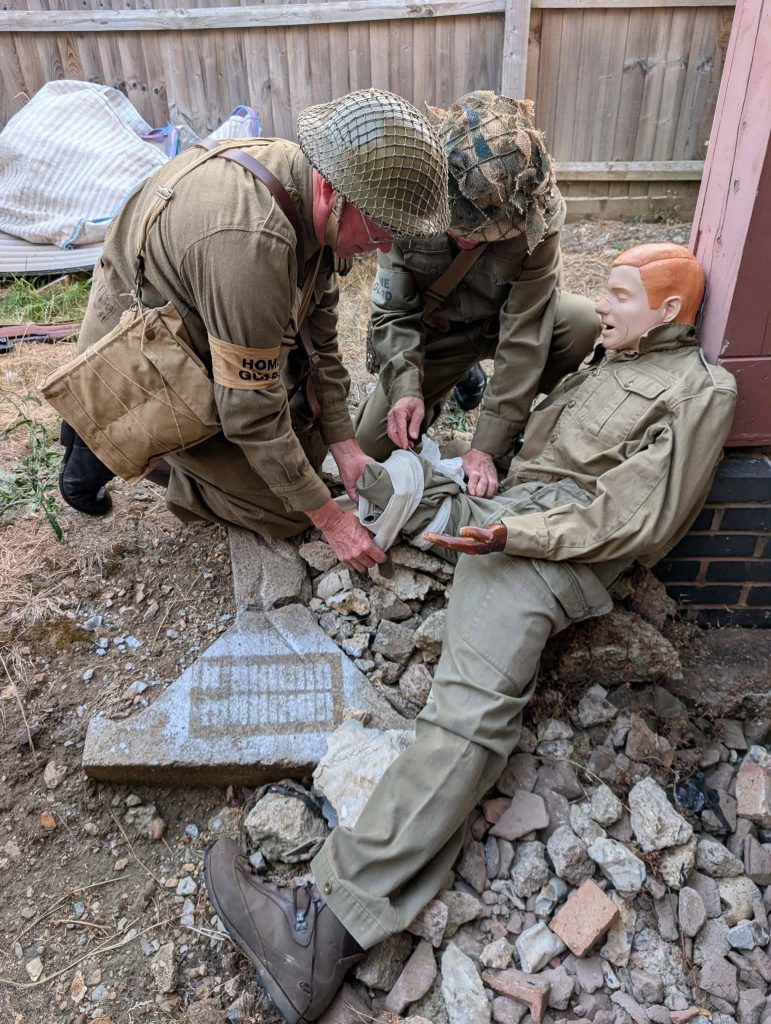
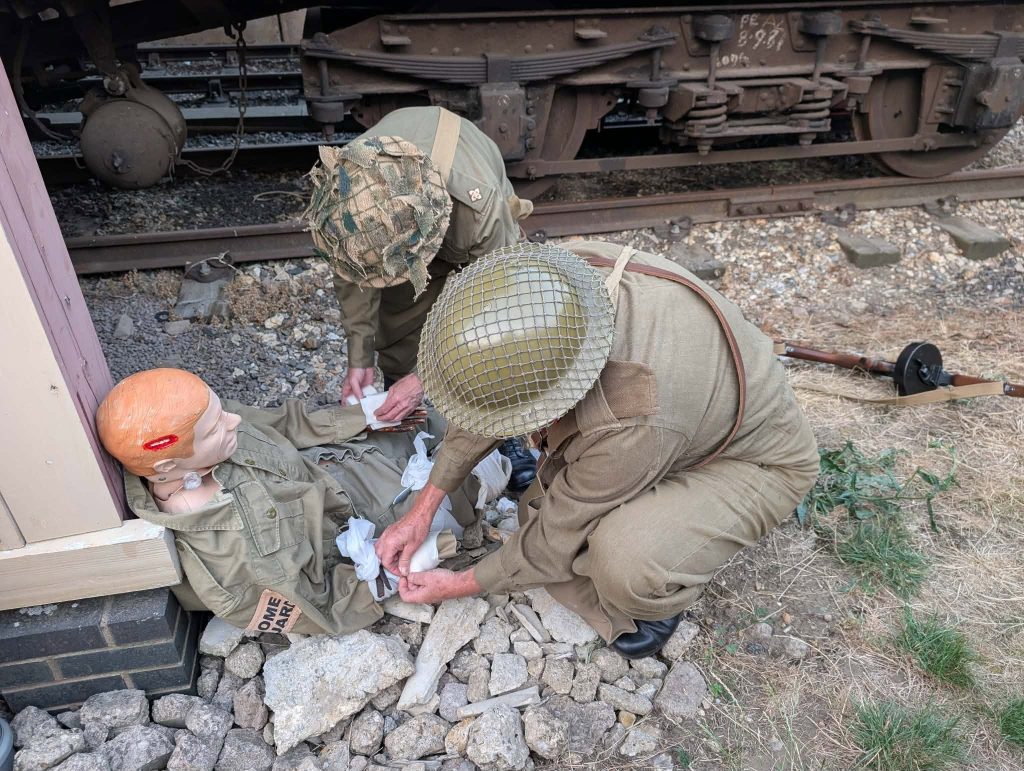
It was an excellent and highly informative evening. Although first aid is a serious subject, the practical and engaging approach ensured that everyone took part – and provided plenty of good-humoured moments as we attempted to master unfamiliar skills.
First aid may form an important part of our living-history training, but its value extends well beyond historical interpretation. The techniques we learned could one day prove useful in a real emergency.
No responses yet